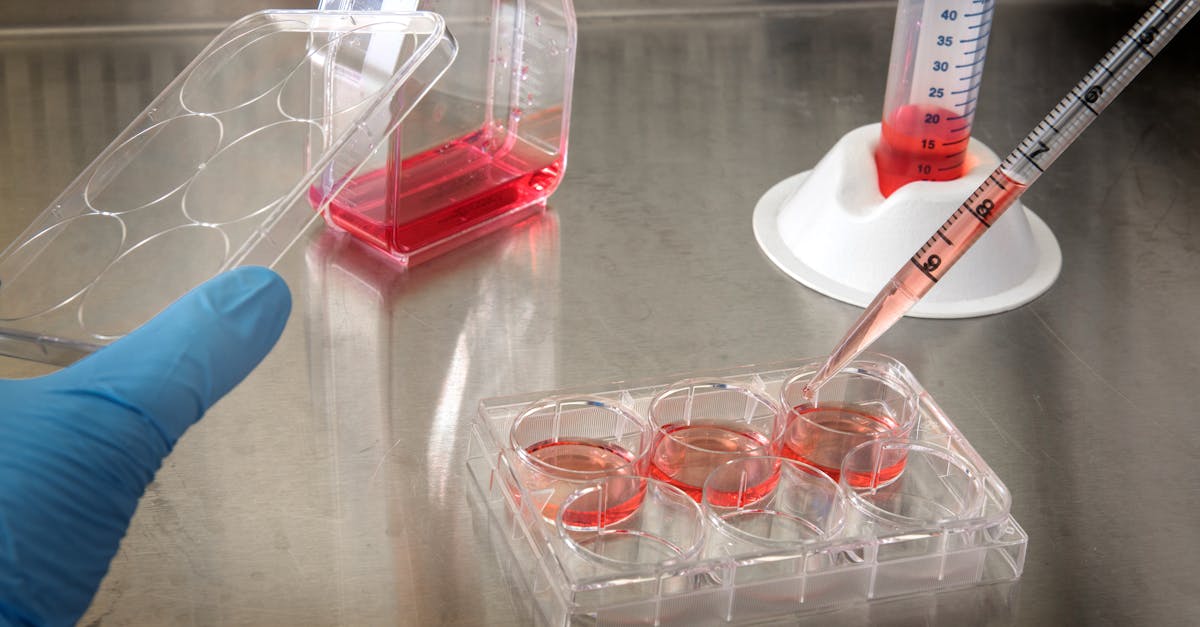
Cell culture is a fundamental technique in biology that involves growing living cells outside the body in a controlled environment. This method allows scientists to study cell behavior, differentiation, and growth in an artificial setting, opening up enormous opportunities for medical research, biotechnology, and the development of new treatments. In 2025, this technique continues to improve thanks to the integration of innovative materials and state-of-the-art bioreactors offered by leaders such as Merck, Thermo Fisher Scientific, and Becton Dickinson. Whether for producing vaccines, testing drugs, or studying diseases, cell culture remains an essential pillar of modern medical advances.

Why is cell culture so crucial for science and medicine?
Have you ever wondered how it is possible to produce vaccines or develop new treatments without testing directly on patients? The answer lies partly in cell culture. It makes it possible to reproduce the essential biological functions of animal, plant or microbial cells, but in an artificial environment. This avoids having to resort to animal or human experiments for certain research. Thanks to this, science can make great strides by testing the toxicity of new drugs, studying the growth of viruses or experimenting with tissue regeneration. In 2025, the ability to cultivate cells in large quantities, with increased precision, will allow companies like Sigma-Aldrich or Invitrogen to offer ultra-specific and safe culture media, to meet ethical and regulatory challenges.
The different types of cells cultivated in the laboratory to meet all needs
Culture methods are not limited to a single cell type. Depending on the research or production objective, primary cells, which come directly from a tissue, or established cell lines can be used. The latter, often called “immortalized”, allow almost infinite growth. Among these, we find, for example, the cells of the HeLa line, widely used in laboratories around the world. To meet varied needs, researchers also cultivate plant cells, stem cells or even microorganisms such as bacteria or yeast. The diversity of cell types allows a vast field of applications, from the fight against cancer to tissue engineering, including the production of recombinant proteins.
| Cell type | Origin | Main features | Main Applications |
|---|---|---|---|
| Primary Cells | Organism Tissues | Limited Use, Few Pasts | Specific Study or Cell Biology BTS BioAC Training |
| Immortalized Cell Lines | Modified or Transformed Cells | Infinite Division, Genetic Stability | Drug Production, Toxicity Testing |
| Stem Cells | Embryo or Adult Tissue | Multiple Differentiation Capacity | Cellular Therapies, Regenerative Medicine |
| Plant Cells | Plants | Culture in Liquid or Solid Media, Rapid Propagation | Obtaining Phytochemicals, Genetic Improvement |
| Microorganisms (Bacteria, Yeasts) | Natural Environments | Rapid Growth, Ease of Handling | Production of Enzymes, Biofuels |
The Delicate Process of Cell Isolation for a Pure Culture
Cells cannot simply be removed from a tissue and cultured. They must first be isolated to ensure their purity. Cell isolation can be performed using various techniques, such as enzymatic digestion or mechanical separation. For example, enzymes such as trypsin or collagenase are used to degrade the extracellular matrix and release the cells. This step is crucial to avoid any contamination or mixing with other cell types. Then there is the explant culture method, where a piece of tissue is placed in a growth medium, allowing the cells to grow out of their original tissue. This entire process must be carried out in a sterile environment, under a laminar flow hood, to prevent any contamination. In 2025, companies such as Lonza and Sartorius offer ultrapure equipment and media, facilitating this key step.
- Use of digestive enzymes
- Clean mechanical cutting
- Strict aseptic process
- Supports for targeted growth
- Optimized culture protocol
Maintaining Perfect Conditions for Cell Growth: A Constant Challenge
Once the cells are isolated, maintaining them in culture requires precise control of environmental conditions. The temperature, generally around 37°C, must remain constant. The gas mixture also plays a crucial role, often with a 5% CO2 supply to regulate the pH of the medium. The composition of the culture medium must also be adapted, with a precise mix of nutrients, salts, amino acids, and glucose. Many suppliers, such as Invitrogen and Sigma-Aldrich, offer specific media, enriched or not, depending on the type of cell being cultured. The surface on which they grow, whether plastic platforms or 3D matrices, influences their morphology and differentiation. In 2025, the trend is toward synthetic media free of animal origin to limit the risk of contamination. Parameter
| Objectives | Recommendations | Common Suppliers | Temperature |
|---|---|---|---|
| Maintained at 37°C | Use a high-performance incubator | Thermo Fisher Scientific, Sartorius | pH |
| Around 7.4 | Buffered Media | Corning, Invitrogen | Gauze |
| Maintain a CO2-rich environment | 5% CO2 in the incubator | Becton Dickinson, Lonza | Nutrients |
| Promote growth and differentiation | Serums or synthetic media | Sigma-Aldrich, Promega | Handling cells safely: the key to reliable results |
Culture manipulations require great rigor. From changing the medium to subculture (or “picking”) and transfection, each step must be carried out in a sterile environment. The presence of antibiotics, such as those offered by Becton Dickinson, helps prevent bacterial or fungal contamination. Passaging cells, which involves transferring a portion of them into a new medium to avoid nutrient depletion, must be carried out with caution. Transfection or transduction, intended to introduce genetic material into cells, is also common, particularly for the production of recombinant proteins. All of these operations must be carried out under a laminar flow hood, using sterilized materials. Clean handling is essential to avoid errors or contamination that could compromise the entire experiment. Using sterile pipettes 🎯
Working under a laminar flow hood
- Controlled addition of antibiotics
- Precise transfection
- You ensure absolute sterility 🚫🦠
- The countless practical applications of cell culture
- What can be done with cell culture goes far beyond pure research. It is also used to produce drugs, test pesticides, and even create skin for burn victims. For example, to manufacture vaccines, a virus is grown inside cells and then neutralized or converted into an antigen. The production of insulin or hormones such as erythropoietin also relies on this technique. More recently, three-dimensional (3D) tissue culture makes it possible to create miniature organs, a real leap forward for regenerative medicine. By 2025, ambitious projects, such as the production of complete organs from stem cells, are taking shape in private and public laboratories around the world.
Essential Processes for Efficient and Safe Cell Culture
The key steps to ensuring a healthy culture begin with obtaining the appropriate cells. Next, they must be provided with a solid or liquid support, depending on their type, and a rich nutrient medium. Replicating natural conditions, such as temperature, pH, or gas saturation, allows for optimal growth. Sterilizing equipment, using techniques such as autoclaves or steam, is essential to avoid contamination. Finally, regular monitoring of growth and adherence to the phases (adaptation, growth, stationary, decline) ensures culture quality. Key Steps
Objectives
Common Techniques
| Suppliers | Isolation | Purity & Standardization | Enzymatic Digestion, Explants |
|---|---|---|---|
| Sartorius, Invitrogen | Support & Media | Optimal Adhesion & Nutrition | Treated Plastics, Synthetic Media |
| Corning, Sigma-Aldrich | Culture Conditions | Faithful Reproduction | Controlled Incubators |
| Thermo Fisher Scientific, Becton Dickinson | Sterilization | Safety & Reliability | Autoclave, Radiation |
| Lonza, Promega | The Ethical and Future Challenges of Stem Cell Culture | Working with stem cells raises moral and ethical questions. In embryos, this often involves debates about the beginning of life and respect for human dignity. By 2025, strict standards will govern this research, imposing rules of consent, ethical sourcing, and transparency. On the medical front, stem cell culture could revolutionize tissue and organ regeneration, making it possible to treat incurable diseases such as Alzheimer’s or Parkinson’s. But these advances must be accompanied by rigorous ethical oversight to prevent any abuse. The key to their responsible use lies in an approach that prioritizes transparency, research in accordance with morality, and respect for the rights of each individual. | Regulatory Compliance |
Informed Consent
Responsible Provenance
- BTS BioAC Training
- Ethical Research
- So, let’s give ourselves the means to advance science without causing harm 🧬 Frequently Asked Questions About Cell Culture: What You Need to Know
- What are the main types of cells grown in the laboratory? Primary cells, immortalized cell lines, stem cells, plant cells, and microorganisms.
- How can sterility be guaranteed in culture?
By using a laminar flow hood, autoclave, sterilized materials, and rigorous protocols.
- What are the main risks during manipulation? Bacterial, fungal, or viral contamination, which can distort results or kill the culture.
- How can organs be produced from cultured cells? By using stem cells or differentiated cells in 3D environments, with advanced bioprinting techniques.