Faced with the challenges of climate change, population growth, and the gradual depletion of water resources, managing this precious resource will become a top priority for the agricultural sector in 2025. The agricultural world is at a crossroads: how can we continue to produce while respecting the planet? The answer lies in an integrated approach, combining innovation, ecology, and new technologies. Efficient water management is no longer an option; it’s a necessity to ensure food security, preserve soil quality, and reduce our environmental footprint. Between the need to reduce consumption, adopt sustainable practices, and harness technological innovations, the future of our agriculture largely depends on our ability to balance these issues. In this article, discover how tomorrow’s agricultural revolution relies on concrete solutions, ranging from intelligent resource monitoring to strengthened regulations and technological innovations like HydroSolutions and AquaTerra. Water management in agriculture is a significant societal issue, a collective challenge that must be addressed to preserve our food and ecological future. The fundamental challenges of water management in agriculture
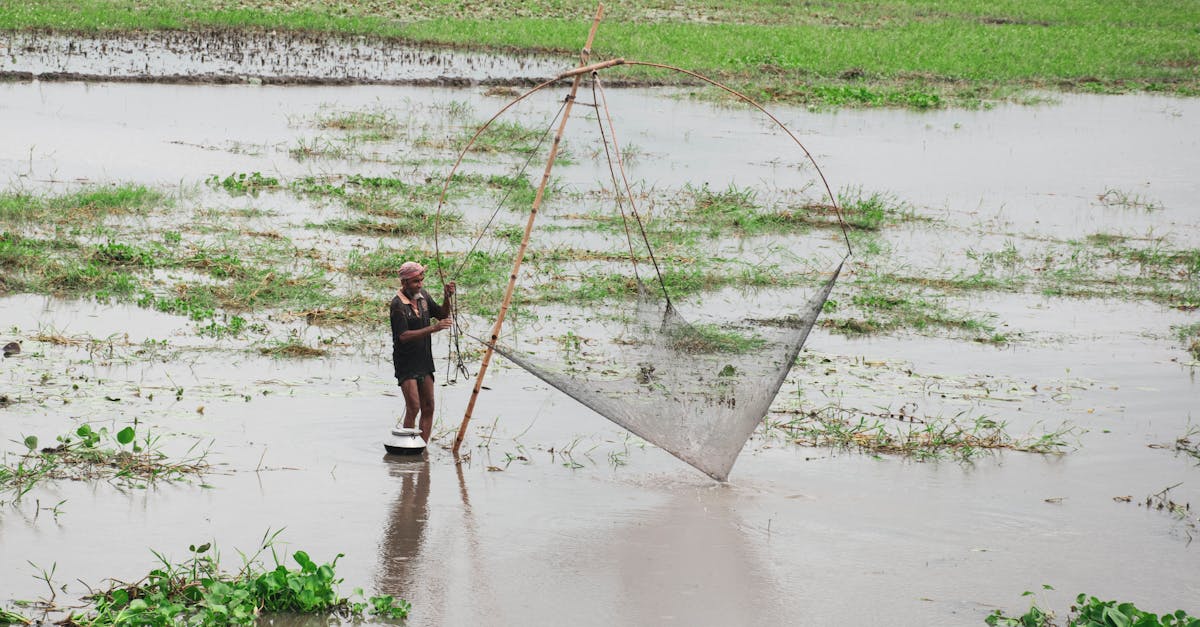
In a time when water is becoming an increasingly scarce resource, understanding its challenges in agriculture is essential. By 2025, nearly 70% of the world’s freshwater will be used to support our crops and livestock. Is that still enough? The reality is that growing demand and climate change have already disrupted traditional water balances. The main issue is not only the quantity of available water, but its quality, distribution, and sustainability. Irrigation, for example, is an essential practice to ensure stable harvests, but it must comply with strict quotas to avoid waste and pollution.
The challenges related to water management in agriculture go far beyond simple use. They also concern soil health, air quality, and biodiversity. Pollution from nitrates or pesticides, often resulting from agricultural practices, weakens water resources and impacts human health. The key to addressing these challenges is rational management: knowing precisely how much water to use, optimizing storage, reducing waste, and promoting responsible agricultural practices.
To better understand this issue, here is a summary table of the main challenges:
Issue
| Description | Consequences | Water scarcity |
|---|---|---|
| 💧 Growing need, declining accessible resources | Droughts, reduced harvests | Water pollution |
| 🛢️ Excessive use of fertilizers and pesticides | Contamination of groundwater, health risks | Waste |
| 🚱 Irresponsible water use | Water shortages, rising costs | Environmental impact |
| 🌱 Unsustainable agricultural practices | Destruction of ecosystems, loss of biodiversity | Soil management |
| 🌍 Contamination and erosion | Reduced infiltration capacity, prolonged drought | Innovative solutions and sustainable practices to optimize water management in agriculture |
To meet these challenges, the agricultural sector must turn to innovative solutions. Technology plays a key role in this revolution, with equipment such as HydroSolutions and WaterGuard, which facilitate precise and intelligent management of water reserves. Among the key innovations is precision irrigation, which limits consumption while ensuring optimal crop growth.
But technology alone is not enough. Implementing sustainable agricultural practices is equally essential. These include: 💧 Rainwater harvesting with AgriEau systems 🌱 Crop rotation and diversification to optimize water retention 🚜 Use of economical irrigation systems such as SmartIrrigation 🛠️ Soil improvement through composting and reduced tillage
🔍 Surveillance and monitoring via connected sensors, such as AquaGestion
- Furthermore, strategies such as reducing the use of plant protection products, restoring buffer zones, and protecting catchments are part of the comprehensive approach proposed by stakeholders such as EcoHydrologie. All of this is also based on appropriate regulations to stimulate innovation and responsibility. A summary sheet to summarize these strategies:Techniques / Practices
- Objectives
- Examples ✔️ Rainwater harvesting
- Reduce dependence on groundwater
- Tools AgriEau
and IrrigaTech🌱 Crop diversification
Optimize water and soil management
| Crop rotation, plant cover | 🔍 Smart irrigation | Minimize waste |
|---|---|---|
| Solutions | SmartIrrigation | and HydroAgri 🚜 Soil improvement Retain more water naturally |
| Biochar, compost | 👩🌾 Connected monitoring | Proactive and precise management |
| Humidity sensors, | AquaGestion | How Regulations and Technology Shape Sustainable Water Management In 2025, the emergence of new regulations will strengthen the accountability of agricultural stakeholders. The European Water Directive and national laws require the integration of environmental considerations into every practice. Regulations also impose protection zones such as EcoHydrologie and EauSage to preserve aquifers and capture pollution at the source. At the same time, technology is advancing rapidly. Sensors and remote sensing enable continuous and precise monitoring of water resources. Innovations such as HydroSolutions offer modeling tools to predict future availability or optimize irrigation. The platform Phytotechnology Innovations in Agriculture presents several solutions integrating soil science, water management, and biomimicry. Companies such as WaterGuard also use artificial intelligence to analyze data and anticipate water crises. Furthermore, the integration of these solutions into a regulatory and territorial framework now makes it possible to develop planned and coordinated management projects, such as the AquaTerra program. |
| A summary of these tools: | Tool / Solution | Functionality |
| Impact | ✔️ Connected sensors | Real-time monitoring of water reserves Reduced waste, early leak detection |
🌐 Modeling platforms
Forecasting and irrigation optimization Better overall management 🧠 AI and Big Data Predictive crisis analysisProactive planning
🔗 Regulatory tools Strengthened accountability Protection of sensitive areas Agroecology: the key to sustainable and resilient water management Faced with the limitations of traditional methods, agroecology is emerging as a genuine solution for environmentally friendly agriculture. By integrating natural techniques, it promotes reduced water consumption while increasing farm resilience to climate hazards.
It prioritizes soil restoration through organic farming, plant cover, and the maintenance of biodiversity to optimize water infiltration and storage. This allows for more natural management, less dependent on external resources. For example, the use of permaculture on some farms has reduced their water consumption by 40% and increased their self-sufficiency. In practice, many farms are now adopting approaches such as biocontrol or targeted fertilization to reduce the use of chemicals and preserve water quality. The Plant Science Innovations platform highlights these sustainable innovations integrating applied ecology. Discover the importance of water management, an essential discipline for preserving our water resources, optimizing water use, and ensuring a sustainable future. Explore innovative solutions for efficient water management in the agricultural, urban, and industrial sectors. The benefits? Greater resilience, less waste, and healthier and more sustainable agricultural activity. The key is also collective commitment, ongoing training, and the adoption of innovative solutions such as EcoHydrologie or HydroAgri. Participatory management: a major lever for sustainable water management in agricultureEffective water management requires the involvement of all stakeholders. Operators, local authorities, researchers, and citizens must collaborate to develop sustainable strategies. In 2025, we are seeing an increasing number of participatory projects emerge, with everyone contributing their part.
Territorial consultation groups play a central role in this approach. Their strength lies in local knowledge, resource pooling, and the ability to deploy appropriate solutions. The example of AquaTerra perfectly illustrates this approach: bringing together stakeholders around a coherent action plan, integrating agriculture, the environment, and the economy.
| Digital tools, such as collaboration platforms and remote sensing, also facilitate this dynamic. The EauSage platform is a good example: it allows for continuous monitoring of water conditions and the sharing of this data with all relevant partners. In practice, this translates into: | 🤝 Consultation between farmers and managers | 📊 Sharing data on the state of water resources |
|---|---|---|
| 🌍 Development of local projects based on local knowledge | 🧩 Diversification of solutions based on specific needs | 🌱 Awareness-raising and ongoing training for stakeholders |
| FAQs on sustainable water management in agriculture | Q1: What is precision irrigation? | A: It’s a technique that uses sensors and automated systems to water exactly what crops need, thus avoiding water waste. |
| Q2: How can agricultural stakeholders reduce their water footprint? | A: By adopting techniques such as rainwater harvesting, crop diversification, soil conservation, and smart irrigation systems. | Q3: What technological innovations enable better water management? |
| A: Connected sensors, water modeling, artificial intelligence, and platforms such as plant science innovation in agriculture. | Q4: What are the key regulations for water conservation in 2025? | A: The European Water Directive, ZNIEFFs, and national strategic plans for integrated water management. |
Q5: How can we engage farmers in a sustainable approach?
A: Through training, awareness-raising, technical support, and financial incentives through subsidies and innovative schemes.