
Essential Tools for Protein Modeling: A Dive into Basic Software
Understanding protein structure is at the heart of advances in biology, medicine, and biotechnology. With the exponential growth of data and discoveries in 2025, it is becoming essential for researchers, students, and enthusiasts to equip themselves with software adapted to molecular modeling. But what are these essential tools, and how can they transform our vision of biomolecules? From visualization to prediction and simulation, let’s explore the world of protein modeling software, including those that make a difference in everyday science.

Why is protein modeling so crucial in modern research?
Does it still need to be demonstrated that understanding the shape and dynamics of a protein can be a game-changer in medicine, agriculture, or the environment? The answer is yes, and it’s even truer than ever in 2025. The key is modeling. Visualizing a structure in 3D allows us to anticipate how a protein interacts with other molecules, such as drugs or ions. It also facilitates the identification of active sites, those key areas that influence biological behavior. Moreover, modeling facilitates the design of new proteins capable of innovative functions.
What may seem complex or reserved for experts becomes accessible thanks to powerful software. Their benefits? Accelerating the discovery of disease treatments, optimizing the production of biomolecules, or even better understanding how life works at the molecular level. The key to success lies in mastering these tools, capable of transforming a few lines of code or images into concrete knowledge. Mastering this software also means having access to a library of valuable data, such as those in the PDB database, to build on established models. The tools in this range have undergone considerable evolution in 2025, integrating artificial intelligence for even more precise and rapid modeling. A real turning point for biomolecular research. Discover our protein modeling software, designed to help researchers visualize and analyze protein structure. Optimize your structural biology studies with advanced tools and an intuitive interface. What are the essential protein visualization and modeling software programs in 2025? Simply put, there is a wide range of software programs that cater to different user needs. Some specialize in visualization, others in molecular dynamics prediction or simulation. Here’s an overview of the main software programs used in 2025:
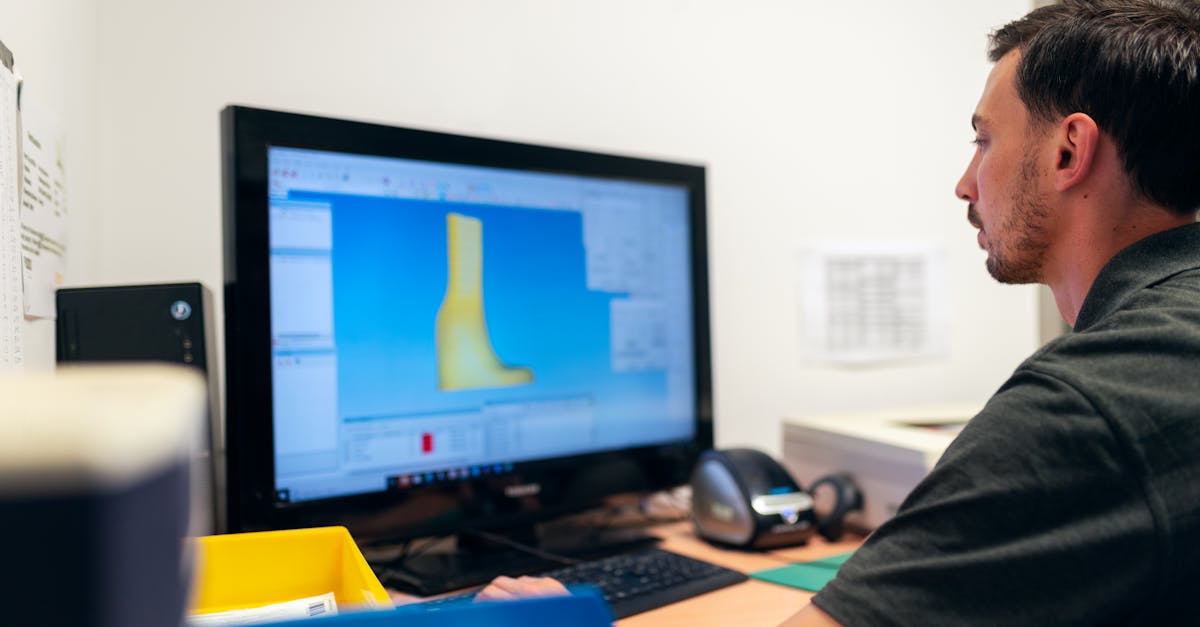
: One of the most popular, easy to use for exploring 3D structures. It also allows you to create high-quality images for publications or presentations.
Chimera
- : Very comprehensive, with advanced features for analyzing, visualizing, and modifying protein models. Its UCSF version, ChimeraX, offers even more power, especially for complex or large structures. VMD (Visual Molecular Dynamics)
- : Primarily dedicated to molecular dynamics, it also allows the visualization and analysis of trajectories resulting from computer simulations. COOT
- : Specific to the construction or modification of models from experimental data, particularly in crystallography. Swiss-PdbViewer
- : An intuitive interface for studying and optimizing protein conformations by comparison with experimental or modeled structures. Rosetta
- : One of the leading tools for structure prediction based on mechanics and machine learning. BioBlender
- : To animate or illustrate protein behavior by combining 3D modeling and animation. Jmol
- : Open-source, lightweight tool, perfect for online use or in interactive training. Galaxy
- : Integrated platform for processing biological data, including modeling, simulation, and structural analysis. This suite of software complements each other according to needs: simple visualization, advanced modeling, or precise simulation. Using them together can truly make a difference in a research project. For example, once a structure is obtained using Rosetta, there’s no need to start from scratch; they can precisely visualize it with ChimeraX or PyMOL, or even enhance the study with VMD to track dynamic movements.
- Discover our protein modeling software, designed to help researchers and students accurately visualize, analyze, and predict protein structures. Optimize your molecular biology research projects with advanced tools and a user-friendly interface. How to choose the right software for protein modeling?
Is selecting the right tool so straightforward? The answer quickly depends on several parameters. First, the complexity of your project: if you only want to visualize a structure, a simple Jmol or Swiss-PdbViewer may suffice. For more advanced analyses, conformation modeling, or even dynamic simulation, you’ll need to use software like GROMACS or Rosetta.
Finally, computing power should not be overlooked. Advanced modeling, especially in 2025, requires significant resources, even collaboration with supercomputers or specialized cloud platforms. Compatibility with machine learning or database integration is a real plus. The key? Relying on a step-by-step approach, using software adapted to each stage of the process, from initial modeling to final validation.
Key steps for effective modeling in 2025
What are the ingredients for ensuring high-quality modeling? The method relies on several crucial steps. First, the collection of experimental or predictive data. Then, the use of software to generate an initial model, often using the homology technique if a similar structure already exists. At this stage, it is important to adapt and optimize the conformation using software such as Chimera or Swiss-PdbViewer, by adjusting torsion angles or performing energy minimizations.
A key step is validation. This involves comparing the model with experimental data, such as X-ray diffraction or cryo-EM. If the match is satisfactory, the model can be simulated or studied, particularly through docking or molecular dynamics. All of this requires mastery of several tools and a precise understanding of their parameters: simulation time, energy scales, or applied force. Reproducibility also means respecting each step, documenting your experiments, and sharing your results so that others can verify or continue your work.
Step 📋
Tool 🧰
Objective 🎯
| Data collection | PDB database | Gather known structures for homology modeling |
|---|---|---|
| Model generation | Rosetta, Swiss-PdbViewer | Create a reliable initial structure |
| Optimization and validation | Chimera, PyMOL | Correct, adjust, and verify compliance |
| Dynamic simulation | GROMACS, VMD | Study behavior over time |
| All this shows that in 2025, modeling is not just an art, but a true science integrating several steps, tools, and collaborations. Success depends above all on rigor, precision, and the ability to make the most of modern computing power. | Rules and best practices to follow in biomolecular modeling | A key question for anyone involved in modeling is: how can you ensure the quality and ethics of your work? The answer can’t be invented, but learned through experience. First, respect security and confidentiality standards, especially when handling sensitive or private data. Second, with regard to intellectual property, you must always credit the sources, especially for structures derived from public databases or collaborations. |
It is also essential to adopt a responsible approach by validating your models with experimental data and avoiding any fraudulent manipulation or abusive interpretation. Reproducibility is a golden rule: document each step, save your scripts and parameters, and share your results on open platforms or through collaborations, in accordance with the standards in effect in 2025.
Regarding ethics, you must be aware that these tools can also be used for irresponsible purposes, such as the synthesis of toxins or the creation of dangerous mutants. The key to avoiding this? transparent use, partnership with experts, and strict compliance with international regulations. Finally, science must adhere to principles of integrity, and modeling is no exception.
Technological advances pushing the boundaries of modeling in 2025
In 2025, modeling software is constantly evolving, driven by artificial intelligence and computing power. What’s new? The ability to predict not only the structure of a protein, but also its dynamic behavior in a cellular environment or even within an organism’s body. Thanks to machine learning algorithms, latest-generation models like AlphaFold 3 can generate structures with unparalleled accuracy. A real leap forward compared to traditional methods, which often required several weeks of intensive calculations for a single structure.
New tools integrated into cloud platforms also enable real-time modeling, with instant global collaboration. Multi-scale modeling, encompassing atomic structures, protein networks, or complex molecular interactions, is now accessible to even small teams. Finally, the networking of massive databases allows for the continuous exchange, comparison, and improvement of models, in a constant cycle of innovation. FAQ on Protein Modeling in 2025: Everything You Need to Know
Which software is the most powerful for modeling in 2025?
The essentials include PyMOL, ChimeraX, Rosetta, and GROMACS, enhanced by the AI integrated into AlphaFold 3.
Can membrane proteins be modeled efficiently?
Yes, thanks to specific solutions such as certain Rosetta or Galaxy modules, optimized for these complex structures.
- How can you validate the reliability of your models?
- By comparing them with experimental data, such as diffraction or cryo-EM, and by using several validation tools.
- Is modeling software accessible to beginners?
- Some, like Jmol or Swiss-PdbViewer, are very accessible, but training or support is recommended.
- What are the trends for 2025?
- An ever-increasing integration of artificial intelligence, the cloud, and multi-scale modeling, paving the way for faster and more accurate discoveries.