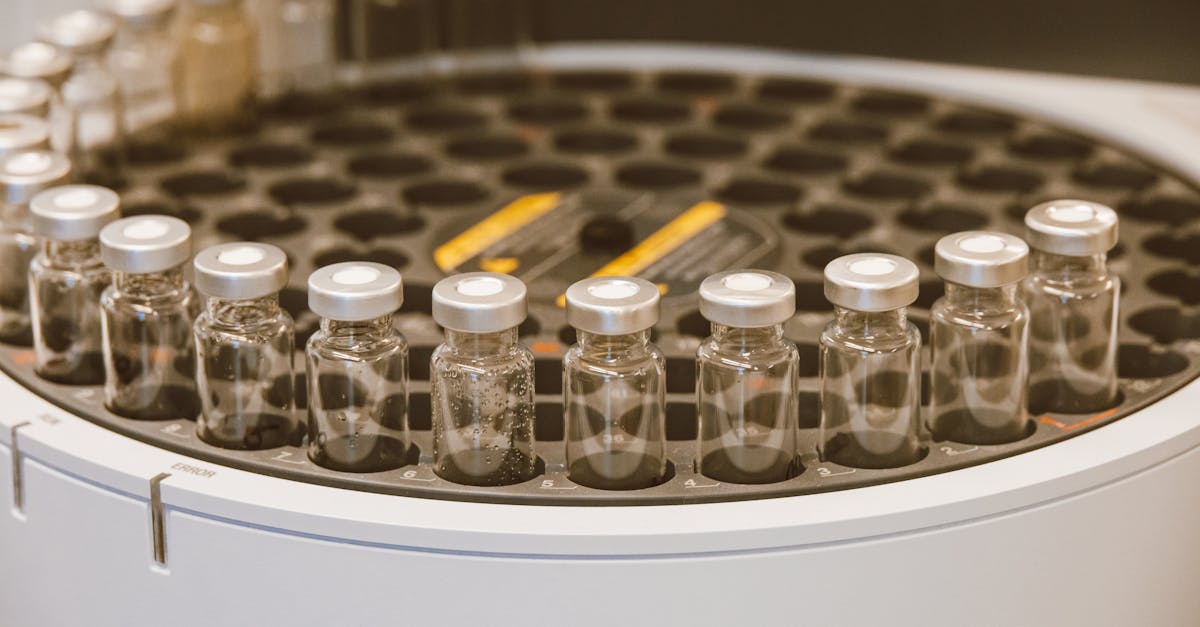
Good Manufacturing Practices, often referred to as GMP, are now a central concern in the pharmaceutical, cosmetic, food, and even cosmetic industries. In 2025, their role will continue to intensify, especially in the face of growing challenges related to consumer safety and regulatory compliance. Imagine a factory where each stage of production is subject to rigorous controls, where each staff member is trained and vigilant, and where each batch of product can be traced, just like a gardener tending to their precious plants. This is the very foundation that guarantees the reliability and safety of our favorite medicines or foods. But what exactly are these GMPs, and how do they apply to each stage of manufacturing? This is what we will explore in detail in this article, with the aim of understanding their essential importance in a world where quality and safety can no longer be compromised. Discover how companies like Pfizer, Sanofi, and even Laboratoires Boiron rely on these standards to offer safe, effective products that comply with strict regulations. Between systematization, risk management, and continuous improvement, GMPs are shaping a sustainable and responsible industrial future.
Why GMPs are the cornerstone of safety in the pharmaceutical industry
Questioning the precise role of GMPs in the pharmaceutical industry means remaining aware that patient safety largely depends on compliance with these practices. When we talk about standards like those implemented by Johnson & Johnson or Pierre Fabre, we are talking about real lines of defense against any error or contamination. For example, in 2023, a range of Bristol-Myers Squibb drugs was recalled after a routine inspection detected microbial contamination linked to non-compliance with GMPs. Therefore, the issue is not simply regulatory, but above all health-related. GMPs encompass a set of rules designed to control, document, and guarantee quality at every stage of manufacturing. They cover everything from the receipt of raw materials to the handling of equipment and final storage. Compliance with them prevents defective or contaminated batches of drugs from reaching patients. 🎯 Ensure national and international regulatory compliance
- 🔍 Prevent any risk of cross-contamination
- 🛡️ Protect the health of the end patient
- 📈 Maintain consistent product quality
- 💼 Promote effective risk management
- https://www.youtube.com/watch?v=ZstbMMs5TZw
The key elements that make up the GMP framework play a central role in structuring production. It all begins with extensive staff training. Those who handle materials, equipment, or perform inspections must be fully conversant with procedures, hygiene rules, and compliance criteria. Documentation then provides a solid foundation for ensuring the traceability and consistency of actions taken. Written, dated, and signed procedures are essential for each step, allowing for rapid verification, auditing, or, if necessary, correction of deviations. Equipment validation is also crucial. It ensures that each device or system maintains its performance in compliance with recommended standards. Key Element 🔑
Description 📝
| Importance 🌟 | Staff Training | Ensure all employees are trained in GMP compliance |
|---|---|---|
| Reduce errors and contamination | Process Traceability | Document each step to ensure transparency |
| Facilitate audits and investigations | Equipment Validation | Verify performance and safety |
| Prevent malfunctions | Rigorous control of raw materials: an essential step in GMP | The pinnacle of safe manufacturing lies in the quality of raw materials. Regardless of the active ingredients or excipients, their selection, control, and storage must adhere to strict standards. By 2025, the traceability of each batch of raw materials will be systematic, in line with the requirements of groups like Danone and Groupe Seb, where transparency is a priority. In concrete terms, this involves receiving products with compliance checks, microbiological, chemical, or physical tests, and storage under secure conditions. These measures significantly reduce the risk of defects or alterations that could compromise the safety of the finished product. Our example: a company like Laboratoires Boiron, specializing in homeopathic manufacturing, must guarantee that its ingredients, often plant-based, are free from contamination, while respecting strict standards of origin and quality. 🌱 Receiving and identity checks |
🧪 Microbiological and chemical tests
🔒 Storage in controlled areas
- 📝 Accurate documentation of each batch
- https://www.youtube.com/watch?v=pan6SfYB6FE
- Major risks associated with non-compliance with GMPs: a danger to public health
- Non-compliance with GMPs can have serious consequences. Drug contamination, the deployment of defective batches, or even fraud can compromise patient health. When a group like Pfizer or Johnson & Johnson fails to adhere to these practices, the financial stakes are immense, not to mention the human toll. In 2024, an error in the microbiological validation of a vaccine batch necessitated a global recall, illustrating just how vital compliance with GMPs is. Beyond the health risk, this can also lead to regulatory sanctions, colossal fines, and lasting reputational damage. The key to avoiding these tragedies lies in a proactive approach, incorporating regular audits, optimal risk management, and a culture of continuous improvement. Risks 🔥
Consequences ⚠️
Microbiological contamination
| Causes product degradation or health risks | Recalls, lawsuits, and economic losses | Formulation error |
|---|---|---|
| Renders the product ineffective or dangerous | Damage to reputation, sanctions | Inadequate traceability |
| Impossible to identify the source of a problem | Crisis of confidence, regulatory failure | Traceability systems in practice to ensure the integrity of medicines |
| Traceability and GMP, an inseparable pair. Traceability allows us to track every step from raw material to patient. By 2025, all stakeholders, from Sanofi to Laboratoires Pierre Fabre, have integrated high-performance IT systems: barcodes, RFID, and secure databases. This method facilitates batch identification, rapid location in the event of a problem, and even recall management. For example, if a batch of vaccines needs to be recalled, traceability makes it possible to precisely identify their origin and destination, thus limiting the economic and health impacts. The key is to have an integrated, robust, and constantly updated system. True effectiveness also lies in training on these tools, so that each stakeholder plays their role perfectly. 🔍 Unique identification via barcode or RFID | 📊 Integrated IT systems | 📝 Automated documentation |
🛡️ Enhanced data security
- Equipment validation: a key step in GMP compliance
- Validation, qualification, verification… these terms often evoke a complex but essential process. In 2025, this step ensures that each machine meets performance and hygiene standards. Validation begins with initial qualification, where the equipment is verified to comply with its specifications. Then, operational qualification and performance qualification ensure that everything functions under various conditions. Recording each step, analyses, tests, and audits—everything must be documented to ensure compliance. This proactive approach limits the risk of malfunction on the production line, regardless of the complexity or size of the facility. Large groups, such as Bristol-Myers Squibb or Johnson & Johnson, dedicate specialized teams to this task to ensure complete control of their processes. Validation Phases 🛠️
- Description 🔍
- Objective 🎯
Verify that the equipment complies with its specifications
Ensure the initial condition
| Operational Qualification | Test operation under real-world conditions | Validate ongoing performance |
|---|---|---|
| Performance Qualification | Confirm that the device operates according to quality criteria | Optimize production |
| The challenges of continuous improvement in GMP management in 2025 | To stay at the forefront, companies must integrate a continuous improvement approach. What does it consist of? First of all, this involves regular audits, both internal and external, to detect any weaknesses or deviations. Then, the analysis of incidents, the implementation of corrective and preventive actions, as well as the ongoing training of staff, become pillars of the approach. Think of the example of Laboratoires Boiron, which, by following these principles, managed to maintain the quality of its products while reducing its costs linked to non-compliance. Finally, monitoring key performance indicators (KPIs), management reviews and adaptation to new regulations help maintain this dynamic. The digital revolution, with artificial intelligence or big data analysis, also offers new opportunities to anticipate, detect and correct discrepancies in real time. | 📝 Regular audits for control and improvement |
| 🔬 Proactive incident analysis | 📚 Continuing staff training | 📊 Monitoring of performance indicators |
🤖 Adoption of new technologies
- The concrete benefits of GMP for patients and industry in 2025
- Ultimately, what do patients and manufacturers really gain from this strict application of GMPs? For patients, it’s primarily the guarantee of a safe, effective, and compliant product. Confidence in a drug or food product relies largely on the quality assurance resulting from systematic controls. For industry, compliance with GMPs also becomes a strategic lever. It drastically reduces costly recalls, benefits from a better reputation, and prepares for new international regulations. Examples include Sanofi and Pfizer, where each new production line is designed according to these standards, ensuring their competitiveness in the global market. An additional benefit: this fosters continuous innovation and the development of team skills, while reducing environmental impact. Benefits for Patients ❤️
- Benefits for Industry 🏭
- 🛡️ Enhanced Safety
- 💰 Reduced Recall Costs
🌍 Compliance with International Regulations
🤝 Trust and Loyalty
| 🚀 Improved Reputation | Frequently Asked Questions (FAQs) about GMP in 2025 |
|---|---|
| What are the main benefits of complying with GMP? | They ensure product safety, quality, and traceability, while minimizing health risks and optimizing production efficiency. |
| How is staff training on GMP carried out? | Regular sessions, led by experts, raise awareness at every stage, with validation tests and updates on new standards. |
| What technological tools support effective GMP implementation? Quality management software, automated traceability systems, RFID, artificial intelligence for real-time deviation detection. | How does traceability contribute to the safety of medicines? |
It makes it possible to track each batch, quickly identify origins and react quickly in the event of a problem, thus avoiding major impacts for patients and the industry.
- Are GMPs evolving in the face of new technological innovations?
- Yes, they are constantly adapting to integrate the latest advances, in order to strengthen the safety, precision and efficiency of quality control.

