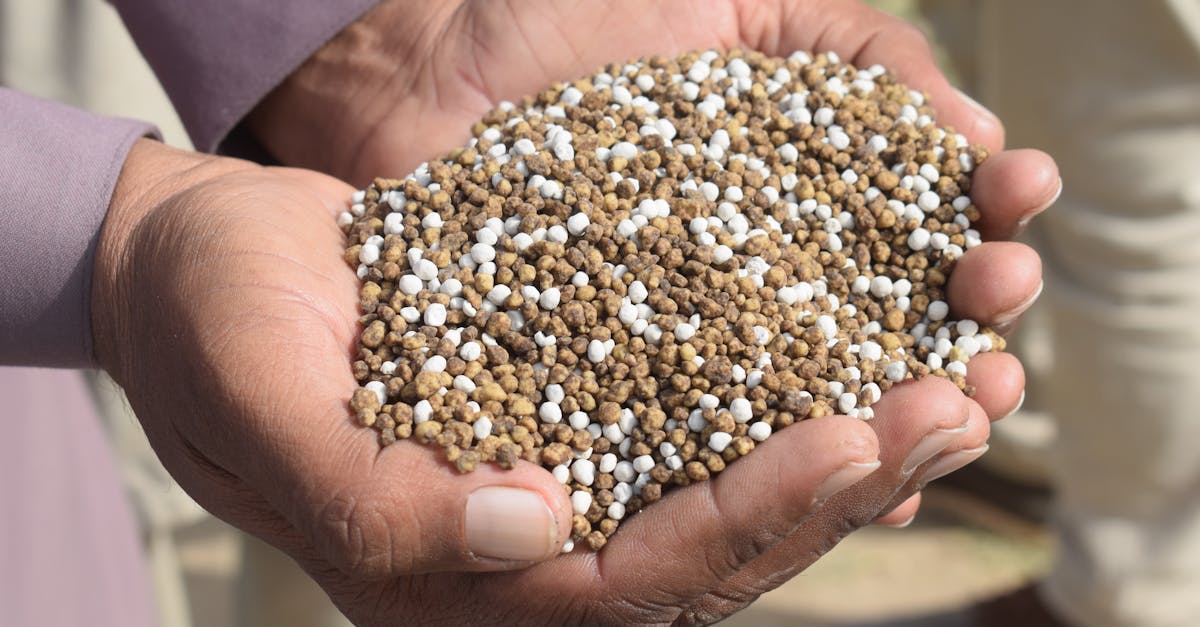
In a world where the population now exceeds 8 billion, ensuring a stable and sufficient food supply is becoming a colossal challenge. The key often lies in improving agricultural practices, particularly through the strategic use of fertilizers. These substances, which provide essential nutrients to the soil, play a much more complex role than simply accelerating growth. In 2025, their importance is reinforced by challenges related to food security, sustainability, and the preservation of natural resources. Faced with soils increasingly depleted by intensive farming techniques, the rational use of fertilizers—whether mineral or organic—is essential to support constantly increasing yields. Innovations in the sector, combined with responsible management, make it possible to optimize soil fertility while limiting environmental impacts. Collaboration between players such as Yara, BASF, CF Industries, and Agrico demonstrates this shift toward more sustainable agriculture, in which the fertilizers of the future play a central role. Beyond simply addressing population growth, considering their place in the agricultural system is now essential to ensuring a peaceful and planet-friendly food future.
Understanding the nutritional needs of plants to optimize fertilizer use
Plants, just like us, need a good nutritional balance to thrive. Their specific nutrient requirements vary depending on their growth stage, species, and soil type. Essentially, they require three main nutrients: nitrogen (N), phosphorus (P), and potassium (K). These key elements are often referred to as “macronutrients” because they play a fundamental role in the plant’s life cycle. For example, nitrogen stimulates rapid leaf and stem growth. Phosphorus, on the other hand, promotes root development and flowering, helping to produce early and robust crops. Finally, potassium increases disease resistance and optimizes photosynthesis, allowing plants to produce more high-quality biomass. Here’s how these nutrients work:
- 🌱 Nitrogen (N): essential for protein synthesis, vegetative growth, and chlorophyll. 🌱 Phosphorus (P): plays a role in root formation, germination, and fruit ripening.
- 🌱 Potassium (K): increases drought tolerance, promotes crop quality, and strengthens resistance to pest attacks. To meet these needs without waste, accurate soil analysis is essential. The goal would be to determine the precise amount of each nutrient available and adjust input accordingly. By 2025, this approach is moving toward increasingly targeted fertilization thanks to new technologies, illustrating the convergence of agronomy, digital technology, and sustainable development. This helps reduce dependence on excessive fertilizers while maximizing productivity. Nutrients
- Main role Form of absorption Impact of deficiency
Nitrogen (N)
| 🌿 | Rapid growth, chlorophyll formation | Ammonium ion (NH4+), nitrate (NO3-) | Chlorosis, slowed growth |
|---|---|---|---|
| Phosphorus (P) 🌱 | Root development, flowering | Phosphate ions (H2PO4-, HPO4-) | Delayed ripening, root weakness |
| Potassium (K) 🌟 | Disease resistance, fruit quality | K+ ions | Small fruit, discoloration, weakness |
| Discover our wide range of fertilizers to boost the growth of your plants. Whether for gardening, agriculture, or indoor growing, find the fertilizer that suits your needs and ensure optimal results. Different types of fertilizers: effective but use in moderation | Fertilizers on the market are not all alike. They are mainly divided into two main categories: mineral fertilizers and organic fertilizers. Each has its advantages, but also its limitations, particularly in terms of environmental impact. Mineral Fertilizers: Immediate Effectiveness but Risks | Mineral fertilizers, made from synthetic or mineral raw materials, are valued for their rapid action. Their widespread availability allows them to instantly meet crop needs. Among the most commonly used are urea, ammonium nitrate, and potassium sulfate. Their main role is to quickly provide essential nutrients to stimulate growth. | ⚠️ |

Overdosage, water pollution, greenhouse gas emissions such as N2O.
♻️
Impact on Soil Fertility:
Dependence, long-term depletion.
- 💡 Example: BASF favors precise fertilization using controlled-release fertilizers to reduce environmental impact.
- Despite their effectiveness, their use requires caution and appropriate management. By 2025, solutions such as the use of organo-mineral fertilizers and biostimulants will be developed to combine efficiency and sustainability. Organic fertilizers: sustainable soil fertility They come from natural materials such as compost, manure, or plant residues. Their main strength lies in their ability to improve soil structure. They promote a rich microbial life, essential for sustainable fertility. Their release is slow, which limits nitrate peaks and pollution.
- 🌱 Advantages: Improved texture, increased soil biodiversity.
🌱
Disadvantages:
Limited availability, slow decomposition.
- 👉 Example: Agrico and Fertikal rely on organic farming to limit their dependence on synthetic fertilizers. Fertilizer Type
- Main Composition Environmental Impact Duration of Action
- Mineral Fertilizers ⚙️ Synthetic, rich in N, P, K
| Nitrate leakage, pollution, N2O emissions | Immediate, short-term | Organic Fertilizers | 🌿 |
|---|---|---|---|
| Natural materials, compost, manure Pollution reduction, structural improvement | Gradual, long-term | Discover our range of high-quality fertilizers designed to improve the health of your plants and optimize their growth. Whether you are an amateur or professional gardener, our fertilizers are suitable for all your agricultural needs. Achieve impressive results with environmentally friendly products. | Innovation and Responsible Management: Towards More Sustainable Fertilizers in 2025 |
| Major companies like CF Industries and Fertibert are investing heavily in research into innovative fertilizers. Their innovations, particularly in the field of slow-release, nanotechnology, and biodegradable fertilizers, are paving the way for more environmentally friendly agriculture. These solutions help reduce dependence on chemicals while maximizing yields. The use of precision fertilization techniques, particularly via the internet or drones, is part of this approach. Adapted management based on soil analysis and weather forecasts limits waste. For example, Fertikal uses connected sensors to monitor soil conditions in real time. | Strategies for sustainable fertilization in 2025 | 🌍 | Use slow-release fertilizers |

🌱
Adopt organo-mineral fertilization
to combine efficiency and ecology.
🤝
- Promote research and innovation through partnerships between companies, such as Yara and Societe Générale des Engrais. ♻️
- Engage in precision agriculture to reduce fertilizer use without compromising productivity. https://www.youtube.com/watch?v=P2_AkaBg0LA Regulatory Challenges and Solutions for Responsible Fertilization in 2025
- Faced with the ecological risks associated with intensive fertilizer use, governments and organizations like L’Oréal Agronomie Moscou are imposing strict regulations. The goal is to limit water, soil, and air pollution while maintaining optimal productivity. 🌐 Dosage Standards
- : mandatory prior soil analysis. 🌾 Encouragement of sustainable practices
💼
Financial Support
- : grants for the purchase of precision fertilization equipment (see here). 🤝 Partnerships
- : with companies like Agrico or Yara for sustainable solutions. Alternative solutions: fertilizing differently for sustainable agriculture Faced with the challenges associated with conventional fertilizers, several alternatives are emerging. Organic farming, agroecology, and research into bio-nanotechnology fertilizers are opening up new possibilities for effective fertilization without harming the environment. Organic farming and agroecology: a comprehensive response to challenges
- 🌻 Natural practices : use of organic fertilizers, enhanced crop rotation, biological pest control. 🌍Respect for biodiversity
- : reduction in the use of harsh chemicals. 💚 Example:
La Ferme Fertilisants de l’Avenir focuses on the recovery of local organic waste to fertilize its crops.
Advanced research: sustainable and bioenergy fertilizers
Innovations such as slow-release, nanotechnology, and biomass-based fertilizers enable efficient and environmentally friendly fertilization. Fertikal and Agri Nutrients are strengthening this momentum by collaborating on integrated fertilization projects. https://www.tiktok.com/@/video/7316271247053180191?u_code=dcbm8c5ai9b963&share_item_id=7316271247053180191
- FAQ: Everything you need to know about the role of fertilizers in crop yields How to choose the right type of fertilizer? : A soil analysis and a precise understanding of the crop’s needs are essential. Consult experts or specialized websites like
- Oeuvray to better guide your choice. What are the risks of overusing fertilizers?
- : Water pollution, greenhouse gas emissions, and soil depletion. Responsible management is therefore essential. What alternatives to chemical fertilizers should we favor in 2025? : Organic farming, agroecology, and the use of bio-nanotech fertilizers. Collaboration with players like BASF and CF Industries is even more essential for innovation.
What are the benefits of organic fertilizers?
: Sustainable improvement of soil structure, reduction of pollution risks, and improved biodiversity.