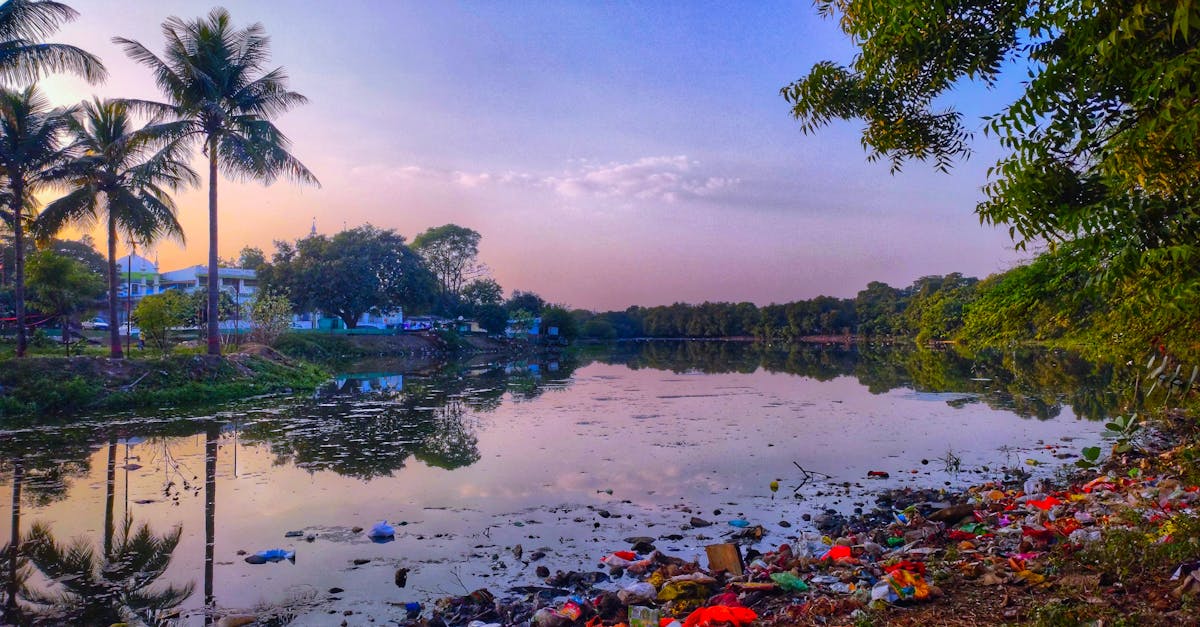
Drinking water, a resource essential to life, is facing an invisible and complex threat: contamination by numerous organic pollutants. As we approach 2025, with the increase in industrial and agricultural activities, the quality of this resource in Europe and elsewhere is slowly but surely deteriorating. In-depth analyses reveal that among the thousands of molecules used daily, many end up in our waters, often without our realizing it. The presence of these contaminants poses a public health issue, especially since some, such as pesticides or compounds from industrial chemistry, resist conventional treatment processes. Monitoring water quality is therefore becoming a strategic issue, mobilizing players such as Veolia, Suez, and Eau de Paris, which are investing massively in new screening and treatment techniques. At the heart of this issue, the need to develop appropriate, reliable, and precise regulations, while remaining accessible, seems more important than ever. The key to success: a thorough understanding of the issues, combined with cutting-edge technology capable of identifying these trace molecules in a complex and dynamic environment.
Why is chemical contamination of surface and groundwater increasing?
For several decades, the quality of natural waters has been steadily deteriorating. According to recent studies, the degradation of surface and groundwater is mainly due to the increase in human activities: intensive agriculture, chemical industries, urban areas, and even domestic areas. Imagine, to produce a large portion of drinking water, this water must first be collected and then treated. But sometimes, even after treatment, certain pollutants such as pesticides, hydrocarbons, or biocide molecules remain present in trace amounts. This may seem negligible, but in the long term, these substances can accumulate or produce harmful effects. Especially since our environment is subject to phenomena such as the natural transformation of chemicals under the effect of light or biodegradation, which further complicates traceability. Here is a summary table to better visualize the impact of each source on contamination:
| Pollution Source | Preferred Contaminant Types | Impact on Water Quality | Recommended Actions |
|---|---|---|---|
| Agricultural Activities |
|
Diffuse Contamination, Increased Nitrate | Pesticide Reduction, Sustainable Management |
| Chemical Industries |
|
Presence at Low Concentrations, Bioaccumulative Effects | Strengthened Controls, Specific Treatment Systems |
| Urban Activities |
|
Accumulation in Groundwater, Potential Bioaccumulation | Improvement of Treatment Plants, Prevention at Source |
Current Limitations of Analytical Methods in the Detection of Organic Contaminants
Simply having the tools to detect these molecules is not enough. The big question is: are our analytical methods sensitive and precise enough to track these contaminants at trace levels? Over the past decade, technology has truly evolved, making it possible to achieve detection levels in the nanogram per liter range. But this progress has its limits: the analytical process involves several steps, including sample preparation. There are two key phases: first, the extraction of target molecules, then their quantification using techniques such as chromatography coupled with mass spectrometry. Precision also depends on the device used, such as the High Resolution Mass Spectrometer, which can measure the exact mass of molecules. However, in practice, the preliminary selection of contaminants to be screened for remains a crucial step, as it is impossible to analyze all the thousands of molecules potentially present in a sample. The sensitivity of these techniques, even highly advanced ones, requires rigorous selection of analytes, which can overlook certain emerging contaminants. Here is a table illustrating this complexity:
| Analytical Technique | Level of Sensitivity | Limitations | Advantages |
|---|---|---|---|
| Liquid Chromatography-Mass Spectrometry | ∼1 ng/L | Targeted analysis, requires prior selection | Fast, reliable for a limited panel |
| High-Resolution Mass Spectrometry | ≤ 0.1 ng/L | Detects without selection, but expensive | Global analysis, detection of unknown analytes |
| SPE Extraction Techniques | Adaptive depending on the method | Presence of matrix effects, loss of compounds | Automation, cost reduction |
Challenges in Contaminant Monitoring: A Gap Between Theory and Practice
Ensuring that the water distributed to millions of households remains clean requires significant effort. The challenge lies in the reality on the ground, where monitoring must address the variability of sampling. Most analyses are one-off, carried out during targeted campaigns, which does not always allow for a true understanding of pollution dynamics. For example, temporary pollution during a rainy or industrial event can easily escape control. To overcome this limitation, researchers are developing devices such as passive samplers, capable of operating for several weeks or months while still providing an overall picture. However, these methods improve representativeness but also introduce biases related to the stability of analytes over time. Regarding the sampling stage, another major challenge is dealing with matrix effects, which can influence the detection of certain contaminants. Finally, the need for a robust network of accredited laboratories and regular monitoring remains the cornerstone to guarantee the reliability of results. Here is a list of the main issues:
- Spatio-temporal variability of concentrations
- Technical limitations of analytical devices
- Ability to detect little-known emerging contaminants
- Limited resources for continuous monitoring
- Time between sampling and analysis

Why does the detection of microplastics in drinking water exceed regulatory thresholds?
Microplastics, tiny pieces of plastic smaller than 5 mm, are now ubiquitous in our waters. Their presence in drinking water is raising growing concerns, especially since conventional methods do not capture their entirety. According to recent research, the majority of microplastics in drinking water are smaller than 20 μm, making them invisible to standard detection techniques. For example, a study conducted by the CRBE Institute in Toulouse shows that up to 98% of these particles escape regulatory controls due to their size. Furthermore, these microplastics can carry toxic substances or pathogenic microorganisms, which could increase the danger to human health. The challenge is therefore twofold: on the one hand, to improve detection, and on the other, to establish stricter protective standards. Progress has been made through innovative techniques such as Raman microspectroscopy, capable of identifying these particles at the nanometric level. This advancement could certainly transform future European regulations, as most current thresholds currently only address a fraction of microplastics. Here’s an overview of the challenges:
| Detection Issues | Emerging Techniques | Potential Impacts | What Needs to Be Done |
|---|---|---|---|
| Inability to See < 20 μm | Raman Microspectroscopy | Inhalation or Ingestion of Toxic Particles | Revise Microplastic Envasion Standards |
| Loose Standards | High-Sensitivity Techniques | Increased Public Health Risk | Update Regulatory Thresholds |
| Presence Invisible to the Naked Eye | Development of Automated Equipment | Set a Precise Alert Limit | Strengthen European Regulations |
How to Strengthen Regulations in the Fight Against Organic Water Contamination
Adopting strict standards is one step, but for this to truly work, appropriate regulations and, above all, effective monitoring are also required. Directive 98/83/EC governs water quality, with specific limits for certain pollutants such as benzene and trihalomethanes. In France, these standards have been incorporated into the Public Health Code, where decrees specify the scope and frequency of analyses. However, given the diversity of contaminants, particularly those from industrial and pharmaceutical activities, these regulations require regular updates. It is also necessary to anticipate new pollutants that emerge, whether from transformation or substitution products. Authorities such as Bureau Veritas and Analyses Enviroments offer monitoring and certification plans to ensure compliance with these standards. An effective strategy also relies on the integration of new analytical techniques, such as liquid chromatography or mass spectrometry, to detect these molecules at nanometric concentrations. Furthermore, it is crucial to raise awareness among industrial stakeholders and water managers of their responsibilities, particularly in preventing accidental spills or the leakage of toxic substances. In short, stronger legislation combined with enhanced and innovative monitoring is the only way to guarantee healthier water for all.
Technological innovations: a breakthrough in the detection of organic contaminants
Its innovations have made it possible to approach the problem holistically. Companies like Hydroscan or ECO-Analyse are developing solutions to monitor water quality in real time. For example, the implementation of connected smart sensors in treatment stations, capable of alerting without delay in the event of detection of a suspicious contaminant. The technique that is revolutionizing this field is high-resolution mass spectrometry, capable of precisely measuring around a hundred molecules in a single analysis, while detecting those which have not been specifically targeted. Miniaturization and digitalization also offer opportunities to generalize monitoring and reduce costs, particularly via portable devices or automated analyses. Another lever: artificial intelligence, which makes it possible to quickly interpret the thousands of data generated and anticipate the emergence of new pollutants. We are also observing the appearance of software like Aquaflow or specific analyzes guaranteed by organizations like EauFrance, ensuring reliable traceability of each step. The key: continuous innovations to anticipate contamination, because the earlier we detect, the better we can intervene. To learn more, check out this link on calibration and interpretation graph.
Predictions and strategies for sustainable water management in 2025
Faced with these challenges, what strategies can be adopted to ensure sustainable management? The answer lies in strengthened collaboration between public stakeholders, industry, and researchers. For example, programs such as the EauFrance project or the Hydroscan initiative aim to integrate contaminant management into a comprehensive approach, integrating prevention, treatment, and monitoring. Prevention must be a priority: upstream, reduce the use of polluting substances in industry or agriculture, and promote alternative techniques such as agroecology or bioremediation. Downstream, treatment technologies must continue to be refined, particularly through the adoption of new membranes or biofilters, capable of capturing even very low-level micropollutants. Raising public awareness is also crucial: better understanding the issues at stake can lead to better action, such as reducing the use of chemicals in our homes or favoring toxin-free products. Finally, research must continue to develop analytical tools capable of monitoring water at the micro and nanoscale, as recommended by the Bureau Veritas association in its studies. The key to 2025 is therefore integrated, transparent, and innovative management, where each stakeholder plays their part in preserving this vital resource.
Frequently Asked Questions (FAQ)
- What are the main organic contaminants in drinking water in 2025? : Pesticides, chlorinated solvents, pharmaceutical residues, and microplastics are the most common.
- How can we improve the detection of microplastics in water? : By using Raman microspectroscopy or high-resolution mass spectrometry, which can identify nanometer-sized particles.
- What are the ways to reduce the presence of contaminants in water at the source? : Reducing chemical substances in industry, improving wastewater treatment, and sustainable agricultural management policies are essential.
- Are current standards sufficient to protect human health in 2025? : Regulations are constantly evolving, but they must continue to adapt to new challenges and emerging contaminants.

