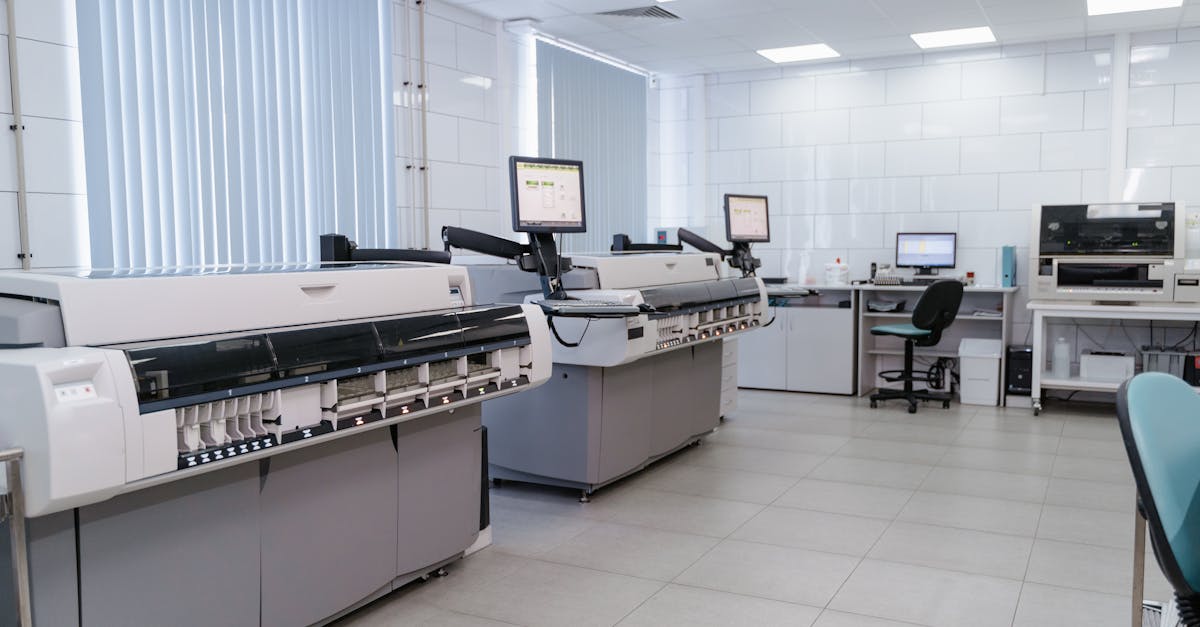
In 2025, the biotechnology sector faces a turning point with the massive integration of automation in its laboratories. These technologies are radically transforming the way biologists, technicians, and researchers work, bringing efficiency, reliability, and speed. The exponential growth in sample volumes, combined with the scarcity of qualified human resources and ever-increasing demands for quality, is now forcing an entire sector to rethink its methods. Automation is no longer an option, but a strategic necessity, capable of ensuring competitiveness and stimulating innovation. From analytical chain management to data interpretation with the help of artificial intelligence, each step is now optimized by sophisticated systems. These advances, driven by giants like Thermo Fisher Scientific, Agilent Technologies, and Waters Corporation, are becoming the spearhead of a modern laboratory undergoing rapid change. Discover how these innovations are shaping a future where precision, safety, and performance go hand in hand with automation, and how they are anchoring biotechnology in a new era of constant progress.
Why process automation in biotechnology will become essential in 2025
In 2025, the question is no longer whether a laboratory should automate its processes, but how to do it effectively. The pressure to obtain fast, accurate results that comply with international standards—particularly ISO 15189—is forcing all stakeholders to adopt advanced technological solutions. Automation offers a clear answer to these challenges: reducing human error, improving sample traceability, securing workflows, and ensuring seamless compliance. Moreover, more and more private and public organizations are investing in this equipment to remain competitive in the face of market growth, which is already worth several billion dollars worldwide. For example, renowned robots such as those developed by Tecan or Hamilton Company, or even automated systems from Thermo Fisher Scientific, are multiplying across France. Their goal? To free up time for biologists, allowing them to focus on in-depth analysis of results or the development of new molecules. Even if this requires a significant initial investment, it is often a profitable bet in the medium term. The key, therefore, lies in a well-thought-out automation strategy, which allows you to simultaneously manage several crucial challenges for this rapidly evolving sector.
A landmark historic shift toward total automation
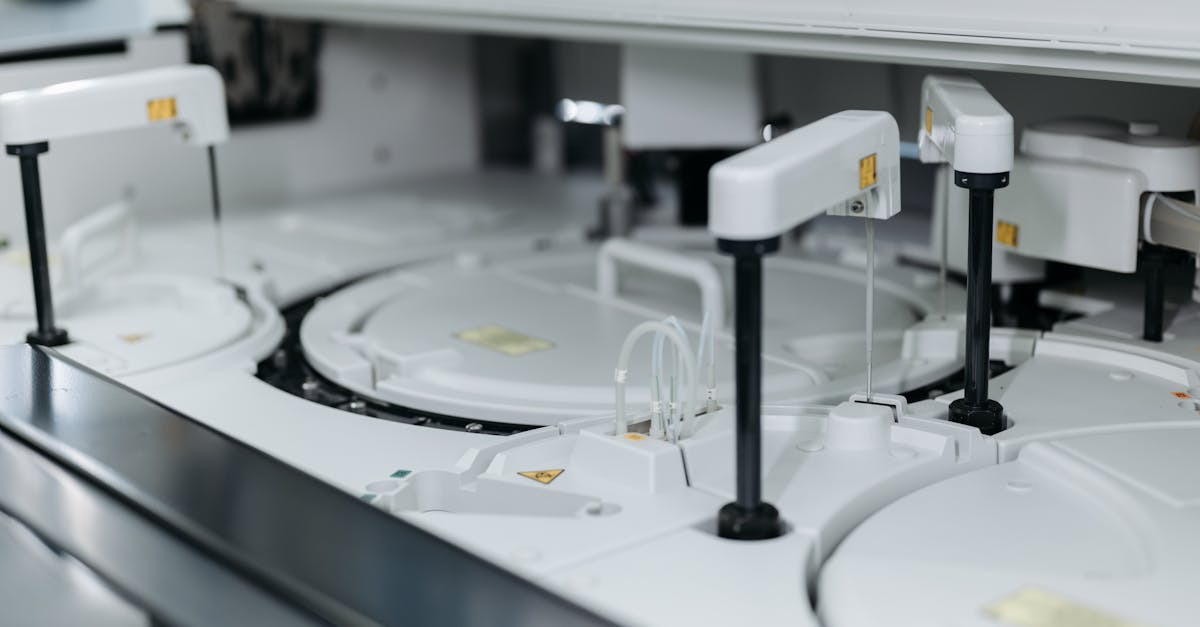
Since the end of the last century, the sector has undergone a gradual revolution, ranging from benchtop automation to ultra-sophisticated robotic lines. Initially, automation was limited to a few isolated machines, with varying degrees of performance. But since the 2010s, everything has changed: systems have become interconnected, integrating all three phases of the analytical process—pre-analytical, analytical, and post-analytical. Platforms such as BD Kiestra™ and Inpeco FlexLab™ exemplify this trend. They automate sample management, such as centrifugation, decapping, and distribution, without human intervention. All this with the goal of saving time and increasing reliability.
Laboratory information systems (LIS) have also undergone significant evolution, evolving from management tools to true decision-making platforms, now known as LIMS. They offer dashboards, automated workflows, and automated alerts in a hyper-connected environment. Finally, since the early 2020s, artificial intelligence has strengthened these systems. Tools like Smartesting and BiologBook enable faster validation, even introducing intelligent assistants for result interpretation and automatic anomaly detection. These innovations, in turn, transform the quality, efficiency, and reliability of laboratories. The transition to this comprehensive automation is therefore becoming an essential step for any organization wishing to maintain its competitiveness in the face of market challenges.
The major challenges of automation in biotechnology in 2025
🔒
- Increased process security, through the reduction of handling errors and identity monitoring 🚀 Improved performance
- and responsiveness, particularly for handling emergencies or critical examinations. 📋 Enhanced traceability, ISO compliance, secure archiving, and precise action tracking.
- 🙌 Human resource optimization, with a refocusing on medical expertise and the reduction of repetitive tasks.🌐
- Interoperability between systems, centralized management, predictive maintenance, and real-time dashboards. The sum of these challenges highlights the need to strategically integrate technology to meet the sector’s future challenges. For example, automated inventory management systems using RFID or barcodes help prevent losses or supply disruptions while optimizing purchasing. Mastering these elements is essential to ensure smooth and secure operations.Discover how automation in biotechnology is revolutionizing research and production processes, improving efficiency and precision while reducing costs. Explore the latest innovations and their impact on the biopharmaceutical industry. Flagship projects illustrating the transition to full automation
- Laboratory / Project Technology / Approach Key results
👨🔬

Microbiology automation with
| PhenoMATRIX™ | Time savings, automated detection, rapid alert on positive cultures | 🌟 | Médilys (Lons-le-Saunier) |
|---|---|---|---|
| 2,000 m² automated platform, distribution and storage by | Roche Diagnostics Processing 2,400 files/day, reducing data entry errors | ⚙️ | LABOSUD (Inovie Group) |
| WASPLab® | system from bioMérieux Doubling of microbiology capacity, improved ergonomics | 🚀 | Oriade-Noviale |
| Robotic platform in Grenoble | Adoption of technologies University Hospitals 🎯 Ouilab Laboratory | Genetic Sequencing with | Twist and AVITI |
| Accurate Genetic Diagnostics, Variant Detection | 🔬 | Cerba HealthCare | Automated Modular Lines in Biochemistry and Hematology |
| Standardization and Local Customization | 🤝 Discover how automation in biotechnology is revolutionizing research and production. Explore innovative technologies that improve laboratory efficiency and facilitate major advances in the life sciences field. | Costs and Investments for Effective Automation in 2025 | Implementing an automated solution represents a significant cost. On average, the initial investment for basic benchtop automation can start at €200,000, but a complete connected line capable of covering the entire process can reach several million euros. |
| Depending on the size of the laboratory, opening or modernizing often involves a budget ranging from €50,000 to €500,000, or even more for large sites. In the global market, these investments are justified by an estimated growth of USD 5.4 billion in 2023, with a projection that exceeds USD 9.5 billion in 2033. Suppliers such as PerkinElmer and Sartorius now offer modular systems that adapt to all types of needs, facilitating a gradual or complete transition. Investment Type | Average Cost | Equipment Example | 🔧 |

€200,000 – €300,000
Thermo Fisher Scientific, Agilent Technologies
💼
| Complete Automated Lines | Several Million Euros | Tecan, Waters Corporation, Eppendorf | 💰 |
|---|---|---|---|
| Management Software | From €50,000 to €150,000 | LABOSUD, Biotek Instruments | 🖥️ |
| Innovations Shaping the Future of Automation in Biotechnology by 2030 | The coming years promise even more scalable robotics, particularly with adaptive arms capable of handling a variety of samples. Autonomous navigation and intelligent contingency management will become the norm. The convergence of artificial intelligence and LIMS systems will enable automatic validation, contextual alerts, and even precise guidance for biological interpretation. | Portable automated systems, connected to central systems, will begin to meet the needs of rural areas or facilities such as nursing homes, where proximity to analysis is essential. Blockchain could also play a key role in securing and traceable biomedical data, providing transparency and inviolability. All indications are that this development will be driven by major players such as Eppendorf, Hamilton, and Waters Corporation, strengthening their positions as major players in the provision of integrated solutions. | The real challenge of tomorrow will be to ensure full compatibility between the ever-increasing number of different systems while simplifying their integration. Finding a balance between advanced automation and flexibility remains a strategic challenge that will shape competition for the next ten years. |
| Frequently Asked Questions About Automation in Biotechnology in 2025 | How does automation ensure reliable results? | By reducing human error through the use of high-performance robotic systems and software, it ensures precise monitoring and complete documentation, which is critical for regulatory compliance. | What return on investment can you expect from automating your laboratory? |
Most labs see reduced operational costs, increased productivity, and improved compliance, but the time to value depends on the extent of automation and initial investments.
How do I choose the right automated solution for my lab?
The selection should be based on size, volumes processed, types of analyses, and budget. Vendors like Tecan and Sartorius offer modular solutions, allowing for gradual progression.