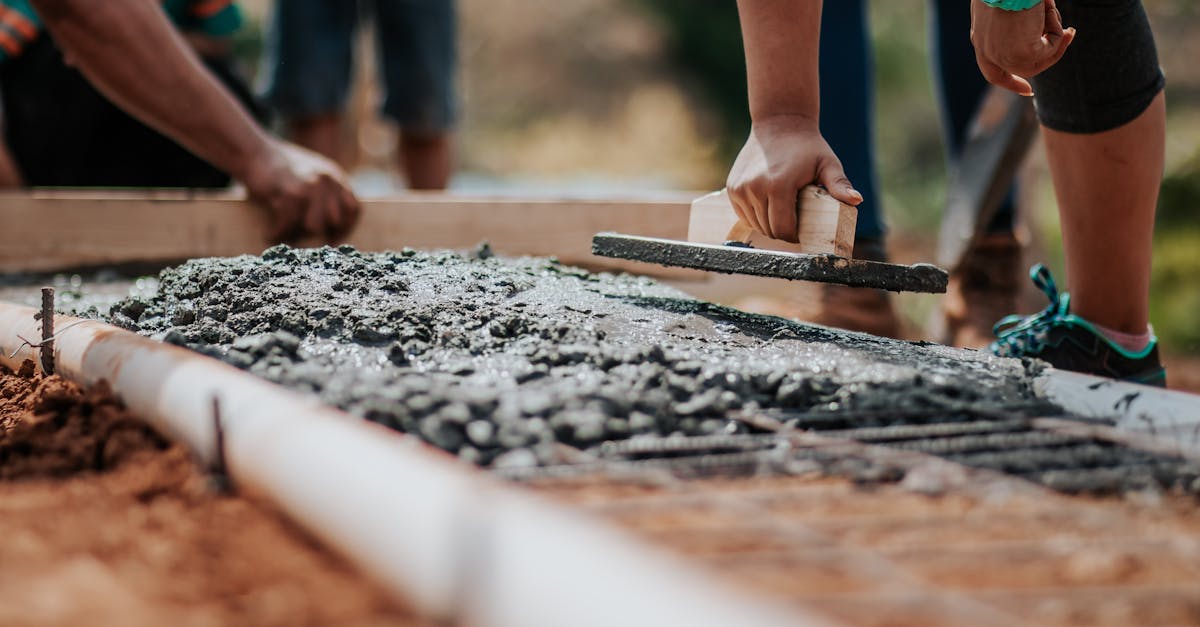
When considering the construction of a building, the enormous importance of the structural work stages cannot be overlooked. This is the fundamental phase, the one that gives stability and solidity to the entire structure. Imagine a real pyramid: if its foundations are poorly laid, everything else can collapse. According to figures, in 2025, the construction sector in France will represent nearly 8% of the national GDP, highlighting how each stage must be carried out with meticulousness, particularly in a context where competition is fierce between players like Bouygues Construction, Vinci, and Eiffage. The success of a structural work therefore depends on a series of key steps, all essential, from site preparation to waterproofing, including formwork and wall construction. But in concrete terms, how is this entire phase organized? What are the steps that should not be skipped if we want to guarantee the longevity of a building? In this article, we’ll break down each step that makes up this crucial phase. You don’t need to be an expert to understand; you just need to want to understand the process, with its technical, human, and logistical challenges. More than just a series of actions, each step must follow a very specific logic. We’ll also discuss the key players, such as the project owner, the project manager, and, of course, the construction companies involved in each phase.
Preparing the groundwork is no easy task, just like pouring a solid foundation or erecting perfectly aligned walls. And none of this is reserved for professionals, even if their expertise is essential to meet standards and ensure quality. What mistakes should be avoided to ensure the project doesn’t become a real headache? The key is to have a clear vision of each step to avoid delays and additional budgets. And then, in a constantly evolving sector like construction, it’s better to know how to adapt to new materials, innovative solutions, and even environmental constraints. Taking these factors into account also means anticipating and ensuring the project’s sustainability over time.
Are you ready to discover how a structural worksite is built step by step? We’ll explore what you need to know to master each phase and make your project a success. So, are you ready to dive into the heart of the matter, simply but seriously? Follow the guide; you’ll see, it’s fascinating! The Fundamentals of Structural Work: Understanding Its Place in Construction
Structural work is, first and foremost, the backbone of the building, ensuring its stability. When we talk about structural work, we primarily refer to the structure that bears the building’s weight: foundations, load-bearing walls, floors, and roofing. These elements are designed to withstand compressive and tensile forces, as well as climatic and seismic events, especially since the 2025 regulations are very strict in this area.
To fully understand, it’s important to distinguish between structural work and finishing work. While the former concerns the structural component, the finishing work focuses on interior design, comfort, and finishing. However, for the finishing work to begin smoothly, the structural work must be flawless. Each part and each material must meet precise standards, whether it’s concrete, concrete blocks, or insulation materials.
The essential components of structural work in 2025 are therefore:
🔸 The earthworks and site preparation phase
🔸 The construction of foundations (semi-base, raft foundations, piles, etc.)
- 🔸 The construction of load-bearing walls in concrete or masonry
- 🔸 The installation of structural elements, such as beams or slabs
- 🔸 The waterproofing (roof installation) to ensure protection against water
- An error in the implementation of the structural work can have serious consequences. For example, if the foundations are poorly sized or poorly constructed, this can cause cracks or, in the worst case, collapse. So, how can we ensure that each step is carried out properly? The answer lies in rigorous planning, advanced technical expertise, and daily monitoring by qualified personnel, often supported by major players in the sector such as NGE or Fayat, who have the expertise to support these critical phases.
- Each step must therefore follow a precise process, with quality checks at each stage. And all this while adhering to a precise schedule to prevent the construction site from extending unnecessarily, which could blow the budget. What exactly happens at each stage? How can these tasks be organized efficiently when there are so many stakeholders to coordinate? The answer lies in well-oiled management, where each professional knows their role.
Professionals are advised to use modern tools such as site management software or BIM models, which allow them to anticipate problems and optimize coordination between teams. But the key is also to be familiar with the regulations, particularly the DTU standards in effect in 2025.
With this in mind, don’t hesitate to consult support resources, such as the guides available on
oeuvray.fr
, or to take training courses to stay up-to-date. Mastering structural work is also a matter of experience and rigor, but also of innovation. Good technical mastery guarantees not only the strength but also the durability of the building. Now, let’s turn to the first crucial step: site preparation. What does it actually involve? What equipment and expertise should be used to get off to a good start?Step 1: Site Preparation — The Essential Foundation for a Solid Construction Site
The very first step in structural work is site preparation. It may seem simple, but it’s a critical phase, as everything depends on the quality of the work carried out here. Imagine you’re building a house or a building: if the soil isn’t stabilized or if it presents risks, it can lead to major defects or deformations in the future. Preparation begins with clearing the land, removing vegetation, debris, and any material that could affect stability. Then, a precise topographical survey must be carried out, which indicates the levels to be respected, taking into account natural or artificial slopes to ensure proper rainwater drainage.
A key step is earthworks, which involves demarcating the building’s footprint, excavating to level the ground, and preparing the platform for the foundation. By 2025, this operation will also require the integration of environmental risk management, such as the installation of drainage systems to limit infiltration or rainwater management.
A wide range of modern tools are used during this stage:
🔹 Bulldozers and graders for earthworks
🔹 Drills and geotechnical surveys to analyze the soil’s nature
- 🔹 Topographic scanners for extreme precision
- 🔹 Modeling software to plan the future building
- Professionals such as Groupe Charier and Spie Batignolles also invest in detailed soil studies, essential for anticipating potential unforeseen events. For example, if the ground contains expansive clay or is at risk of landslides, appropriate techniques must be considered, such as foundation reinforcement or soil stabilization. In other words, this preliminary stage is the foundation of the entire project: if it is poorly executed, everything else can be compromised. For example, in 2024, a construction project in Marseille had to be suspended due to poorly assessed soil, costing several million euros in delays and additional work. Site preparation isn’t something you see often, but it’s what guarantees the building’s durability.
- To put it simply, this stage can be summarized in three main points:
🔸 Site clearing and cleaning
🔸 Geotechnical studies and surveys
🔸 Installation of drainage and stabilization systems
- From this solid foundation, we can move on to the next phase: laying the foundations. Focused on laying the first stone, this stage is both technical and strategic.
- To learn more about the rest of the process, don’t hesitate to consult resources like this practical guide, which details each stage of the construction process step by step.
- Now let’s move on to the foundations, which will truly anchor the building in the ground.
Step 2: Laying the Foundations — The Foundation for the Entire Construction
Once the site has been carefully prepared, it’s time to move on to the most crucial phase of the structural work: laying the foundations. These ensure the stability and durability of the building by supporting the entire structure. By 2025, the design and sizing of these foundations must meet strict standards, particularly based on the type of soil identified during geotechnical studies. There are several types of foundations, depending on the soil type and the load they will have to support: 🔹 Strip footings — to distribute the load along the entire length of a wall🔹 Isolated footings — to support point loads
🔹 Foundation slabs — for very fragile or homogeneous areas
🔹 Piles — when the surface soil is soft or not very load-bearing
The construction process is complex: everything begins with the installation of precise formwork, followed by the pouring of concrete, often reinforced with steel reinforcement. The quality of the concrete is essential: it must meet technical requirements and comply with the recommendations of current standards. Companies like Fayat or Colas are often involved in this phase, their expertise being a guarantee of reliability.
This is not a step to be taken lightly. In 2025, it will be equally important to integrate environmental solutions, such as the use of low-carbon concrete or recycled materials, to limit the construction site’s carbon footprint. The success of this step also depends on the weather: in winter or during inclement weather, solutions such as rapid-setting concrete make all the difference.
- The stages of foundation construction can be summarized as follows:
- 🔹 Excavation and leveling of the ground
- 🔹 Installation of the wooden or metal formwork
- 🔹 Installation of the steel reinforcement
🔹 Pouring of the concrete and proper curing
🔹 Inspections and checks before starting the walls
These are the foundations that will house the rest of the construction. If they are poorly designed or poured, this can lead to cracks, deformation, or failure in the future. Precision, rigorous monitoring, and adherence to deadlines are therefore essential. To learn more about foundation design, it is advisable to consult specialized guides, often available from training centers or professional associations.
- Now let’s move on to the next major step: the elevation, with the construction of load-bearing walls. What techniques are evolving in 2025 to ensure stability while addressing the challenge of the ecological transition?
- Step 3: Elevating the Load-Bearing Walls — Defining the Silhouette
- After firmly anchoring the building in its foundations, we enter the wall elevation phase. This stage is the most visible of the structural work and also one of the most technical. It determines the shape, size, and overall strength of the structure. The materials used vary, but in 2025, the trend is toward more ecological and efficient solutions, such as monolithic bricks or insulating concrete blocks.
- The main steps in wall construction are:
- 🔸 Installing reinforcement if necessary (for concrete walls)
🔸 Installing masonry elements (bricks, cinder blocks, or concrete blocks) 🔸 Fixing openings (doors, windows)🔸 Installing thermal or sound insulation
🔸 Installing internal or external finishes, depending on the project
This process requires careful coordination to prevent the walls from shifting or becoming unstable. Precision in installation, the use of modern tools such as alignment lasers, and the prefabrication of certain elements help speed up and make the process safer.
To achieve this, standards for fire resistance, thermal insulation, and climate conditions must also be met. By 2025, High Environmental Quality (HQE) will become an essential criterion in material selection. Moreover, many companies like NGE and Vinci now offer modular solutions that can be adapted to the specific context.
Here is a summary of the key points for successfully completing this step:
- 🔹 Prepare the masonry elements
- 🔹 Check the plumb lines and levels using surveying tools
- 🔹 Install the walls according to the plans, respecting the spacing
- 🔹 Insert openings carefully and provide specific lintels
- 🔹 Ensure waterproofing and insulation
The art of building solid walls also relies on the choice of materials and mastery of installation techniques. Professionals often favor experienced masons, particularly in complex constructions or those with high environmental requirements.
Now let’s move on to the next step: installing the floors, a key infrastructure for structuring the building’s interior and preparing its verticality. How can this phase be optimized?
Step 4: Installing the floors and interior structuralization
- Floors provide the connection between each level and, more importantly, the foundation for future interior spaces. Whether made of concrete, wood, or prefabricated elements, their design must ensure rigidity, insulation, and mechanical strength. In 2025, more and more companies are adopting innovative techniques, such as prestressed slabs or hollow core beams, to meet performance requirements while limiting environmental impact. Here’s the general process for installing floors:
- 🔸 Substrate preparation—verifying alignment and cleaning
- 🔸 Installation of temporary supports or formwork
- 🔸 Installation of internal networks (electrical, plumbing)
- 🔸 Installation of prefabricated or reinforced concrete elements
🔸 Curing, to ensure optimal hardening of the concrete
🔸 Verification of horizontality and compliance before moving to the next level
Mastering this step ensures good sound and thermal insulation, as well as the durability of the structure. In 2025, the use of prefabrication will help reduce lead times while maintaining high safety standards.
It is also crucial to integrate ventilation and drainage systems, often integrated into the design upstream. By using BIM or site management tools, teams can anticipate interferences and avoid costly deviations. To refine your planning, it’s helpful to consult specific resources. For example, this practical guide provides tips for optimizing each step. Let’s focus on the next step, installing the frame, which marks the final stretch to make the building watertight and airtight. What modern techniques will ensure a safe and durable frame in 2025?
Step 5: Installing the Roof Frame — The Final Structural Step for a Solid Roof
- Once the building’s main structure is in place, the next step is to install the roof frame. Whether made of wood, metal, or concrete, the frame must ensure the roof’s stability and support its weight. The new generation of materials also guarantees resistance to fire, humidity, and climate variations, in compliance with current standards. The main steps for efficient roof framing installation are:
- 🔸 Preparation and assembly of the elements (beams, rafters, joists)
- 🔸 Assembly according to engineering plans and strength calculations
- 🔸 Durable fastening, using anti-vibration or anti-corrosion systems
- 🔸 Installation of insulation and ventilation elements
- 🔸 Final verification of stability and compliance
In 2025, the trend is also toward the use of modular techniques, facilitating prefabrication and rapid assembly. Many companies, such as Spie Batignolles and Fayat, offer modular solutions to reduce work times and improve quality.
Finally, the installation of the roof framing marks both the completion of the structural work and the starting point for the following phases: roof completion, waterproofing, and installation of finishing elements. Would you be ready to take the final step to cover the entire building? Next stop: waterproofing, a crucial step in protecting the interior from the elements.
But first, let’s move on to the final phase of structural work: the exterior finishes, which ensure the building’s protection and aesthetics. What’s the most important thing to check to ensure everything is flawless? Structural finishing: the final touch for a sustainable construction This step, often perceived as purely aesthetic, is in reality essential for the sustainability of the building. After installing the roof, comes the waterproofing work, installation of exterior joinery and treatment of the facades. These interventions guarantee resistance to external aggressions, rain, UV rays and even temperature variations.
In 2025, energy performance also becomes a priority in finishing: exterior walls are equipped with high-performance insulation, often recycled or biosourced, to limit energy consumption. The materials selected must also comply with current environmental regulations.
The key elements in this step are:
🔹 Installation of waterproofing membranes and facade insulation
🔹 Fixing exterior joinery (doors, resistant windows)
- 🔹 The production of coatings or cladding for the aesthetic finish
- 🔹 Protection against humidity and cooling
- 🔹 Checking all connections, knots and knots
- Particular attention must be paid to waterproofing, especially in a context where storms and precipitation become more intense. Implementing a natural or mechanical ventilation system also helps ensure indoor air quality.
- It is advisable to rely on experts such as Colas or NGE, often partners in large projects, to guarantee the conformity of the finishes. To continue learning, see for example this
guide to finishing
.
Let’s now see how the reception phase is organized, a decisive step in closing the site, and the transition to the useful life of the building. What are the crucial points to check?
Site acceptance and commissioning: the final step to ensure quality
Once all the previous steps have been completed, it’s time to demonstrate the quality of the work. Construction site acceptance is an essential regulatory step. It involves a thorough inspection by the project owner, who may express reservations if defects or poor workmanship are detected. The conformity of each constructed element must be verified, particularly for strength, watertightness, and safety.
Legal guarantees play a major role in this phase. For example, the ten-year liability guarantee covers the structure in the event of major defects, while the perfect completion guarantee is valid for one year after acceptance. The key points during this stage are:
🔸 The official acceptance visit with all stakeholders
- 🔸 Drafting of the minutes, with a list of reservations if necessary
- 🔸 Implementation of guarantees and technical documentation
- 🔸 Planning of corrective work if reservation(s)
- 🔸 Final acceptance after reservations have been lifted
- This stage marks the end of the structural work itself, but also the beginning of the building’s practical life: maintenance, regular inspections, and any adjustments. Effective management of this phase ensures the long-term sustainability of the structure.
It goes without saying that rigorous organization, precise documentation, and collaboration between all stakeholders, such as the Charier Group, NGE, or Fayat, guarantee overall success.
Would you like to delve deeper into risk management or post-delivery planning? Discover useful recommendations on this dedicated website. Finally, what advice can you give to ensure the building’s long-term sustainability, particularly by integrating technological and environmental developments? FAQ on the key stages of structural work in constructionQ1: Why is site preparation so important?
Site preparation ensures the stability of the building. If this step is sloppy or poorly executed, it can lead to cracks, deformation, or collapse in the future, with high repair costs. It consists of land clearing, geotechnical surveys, and soil stabilization.
Q2: What is the role of foundations in a structural worksite?
Foundations ensure the stability of the building by distributing the load on the ground. Their design must be adapted to the type of terrain and the loads supported. There are various types, such as footings, raft foundations, or piles, depending on the constraints.
Q3: How can the durability of load-bearing walls be guaranteed?
This involves choosing high-performance materials, precise installation, compliance with fire resistance and insulation standards, and regular inspections during construction.
- Q4: What innovations will impact floor installation in 2025? Prefabricated solutions, such as prestressed slabs, reduce lead times while ensuring high technical performance. Integrating networks during installation is also preferred for greater efficiency.
- Q5: What are the main checks during site acceptance?
- A thorough inspection to identify any potential concerns (cracks, leaks, or safety defects), followed by the preparation of a report. Documentation and guarantees must also be in place to secure the building’s future.