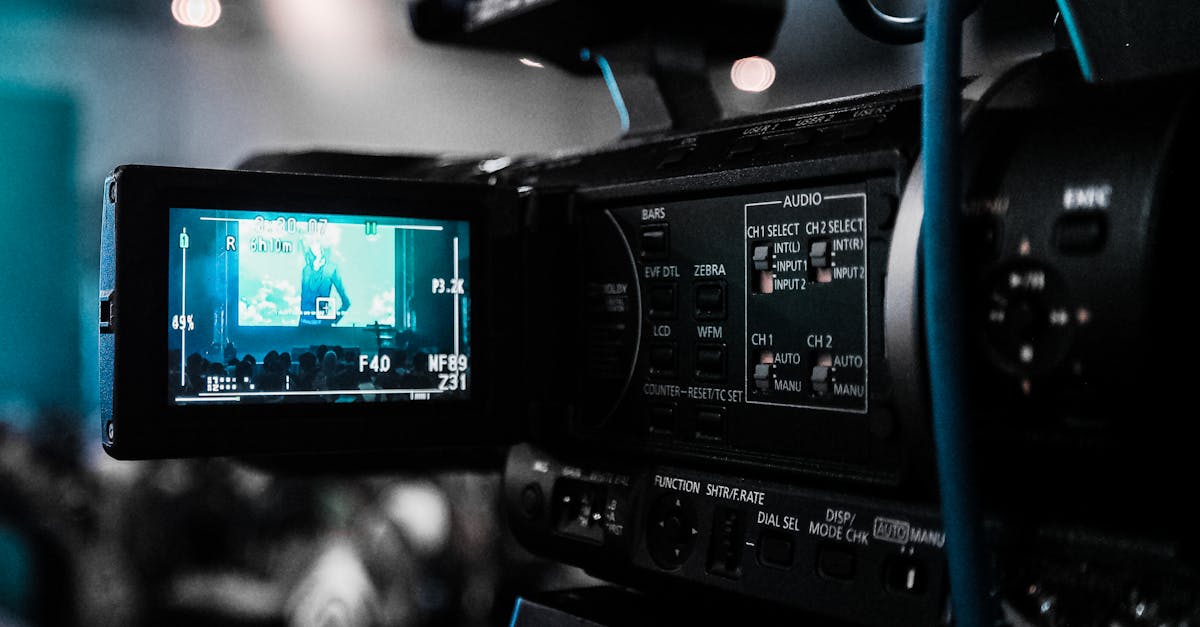
Understand the essential vocabulary of cinema: tracking shot, sequence shot, low angle and other key concepts
When we watch a film, we don’t always realize the complexity behind each image. However, each shot, each camera movement, has its own name, its own technique, and above all, its impact on the story. In 2025, where technology allows even smartphones to film with quality worthy of great films, it is essential to know these terms to better appreciate the magic of cinema. Even if you don’t work in the sector, understanding these concepts can enrich your outlook and your visual dictionary. Whether to analyze a long sequence shot during a trek with Lonely Planet, or to understand why a low angle gives a feeling of power to a character, knowing how to name these shots becomes a real key to decoding cinematic narration.
So, if you want to know everything about these terms which make the big difference between a simple video and a true visual work, this guide offers you an exciting journey into the lexicon of cinema. We will discuss in turn the tracking shot, the sequence shot, the low angle, the framing and other essential techniques, illustrated by concrete examples, anecdotes, and even a few references to the cinematographic news of 2025. Ready? Let’s go!

The tracking shot: when the camera moves to follow the action
What is a tracking shot? It’s simply a camera movement that, by moving through space, accompanies the action on set or in the frame, often offering total immersion to the viewer. It can be done handheld, with a dolly, or with the help of a latest-generation drone, such as those used to film SNCF train journeys or in highly ambitious films. What makes tracking so interesting is its ability to create rhythm, follow a character, or reveal a moving set. In 2025, with the rise of virtual reality or 360° films, tracking takes on a new dimension, blending the physical camera with virtual reality.
There are several types of tracking shots:
- Lateral tracking shot: the camera moves from left to right or vice versa, ideal for following dialogue or movement in a scene.
- Front or rear tracking shot: the camera moves closer to or further away from the subject, facilitating intimacy or context. Circular tracking shot: the camera rotates around the subject, emphasizing the dramatic or directorial nature of the scene.
- Panning shot: Often confused with tracking, this involves rotating the camera horizontally to sweep across a landscape or a multitude of elements within the scene.
- For example, in an adventure film like those produced by Club Med, tracking a trek allows the group to follow through breathtaking landscapes while still creating a dynamic rhythm. What’s important is that tracking shots in 2025 are becoming increasingly fluid thanks to smart stabilizers and ultra-light cameras like those from Nikon or Sony, making it easier to capture even in difficult-to-access locations.
Type of tracking shot
| Main effect | Famous film example | Lateral tracking shot |
|---|---|---|
| Character tracking, dynamic | “Inception” (2010) | Front/back tracking shot |
| Intimacy, Revelation of the Environment | “Children of Men” (2006) | Circular Tracking Shot |
| Strong Staging Effect | “The King’s Speech” (2010) | Panning |
| Sweeping of a Set or a Group | “The Lord of the Rings” (2001) | The Long Shot: A Single Movement to Tell an Entire Scene |
You may have already heard of the long shot, and yet you may not have really understood why it’s so fascinating. It’s a single shot, without cuts or editing, which can last several minutes, or even ten, to give an impression of unity and spontaneity. In 2025, the long shot is used to immerse the viewer in a scene, like during a trek where every movement counts, every breath, every change of scenery must be perfectly coordinated to ensure continuity.
Why Use a Long Shot? Because it conveys a sense of realism, urgency, or truth. It’s as if we’re following the character through their life, without interruption. Directors like Alfonso Cuarón and Alejandro González Iñárritu popularized this technique through iconic works, and in 2025, it continues to be a sensation. Whether it’s an action film or a feature-length documentary, the long take requires extreme precision and perfect synchronization between actors, cameras, and sets.
There are different ways to create a long take:
The long fixed shot: the camera remains static, but the scene is so rich in action that it gives the illusion of continuous movement.
- The moving shot: with a tracking shot or a steadicam, the camera moves through the space to follow the action or reveal the setting. The combined shot: several small shots linked by invisible movements or connections to create an impression of completeness.
- In a documentary for example, a long sequence shot during a Trek in the camouflage of the mountains allows you to capture the atmosphere, the environment and each interaction in complete authenticity. In 2025, innovations in stabilization and ultra-sensitive sensors with Nikon or Sony devices will facilitate this technical feat.
- Types of sequence shots
Features
| Example | Long still shot | Still camera, scene rich in movement |
|---|---|---|
| “Birdman” (2014) | Plan in motion | Traveling or steadicam to follow the action |
| “Children of Men” (2006) | Combined plan | Assembling several pieces without visible cuts |
| “1917” (2019) | Low angle view: playing with perspective and visual power | Can we give power to a character or a scene simply by changing the angle of view? Absolutely. Low angle is this technique where the camera is placed below the subject, looking upwards. In 2025, this technique remains a classic, particularly in superhero films or action films, where the hero must appear imposing, dominant, almost unshakeable. It is also very effective in giving an impression of grandeur to a landscape or a historical monument, such as in a film shot on a trek in Yosemite National Park. |
With the low angle, the perspective changes completely. The subject appears larger, more powerful, and the effect is enhanced by the use of long focal lengths or fast zooms, often shown in documentaries with cameras like Nikon or Sony, to capture every detail from a distance. Moreover, this technique can also illustrate weakness or vulnerability if we reverse the direction and film a character from above, at the top of a cliff or in a crisis scene.
Here are a few things to keep in mind with this technique:
✅ The low angle accentuates power, authority, grandeur
✅ It can also manipulate the viewer’s perception of the subject’s fragility
- ✅ Useful in action scenes, combat scenes, or to showcase a monument
- ✅ Geometry and depth are enhanced, particularly with telephoto zoom lenses
- Low-angle effects
- Main use
| Example film | Power, grandeur | Heroes in action, monuments |
|---|---|---|
| “The Dark Knight” (2008) | Vulnerability, weakness | Crisis scenes, fear |
| “The Silence of the Lambs” (1991) | Depth effect | Enhance a setting or landscape |
| “Spirited Away” (2001) | Framing: the art of composing the image to guide the viewer’s eye | You might think that framing is simply about ensuring the subject fits comfortably within the frame. However, it’s a science! Artistic framing serves to guide emotion, tension, or narrative. In 2025, with the rise of digital cameras like Sony and Nikon, framing possibilities are endless, with ever-larger screens and innovative formats. |
The main types of framing are:
The long shot: shows a landscape or an entire group, often used to set the scene.
The medium shot: frames one or two characters, ideal for dialogue or revealing an important gesture.
- The close-up: focuses on the face or a specific, expressive or revealing detail.
- The extreme close-up: extreme zoom in on an eye, a hand, or a miniature object.
- Each framing choice influences perception. For example, during a trip with Expedia, a long shot showing a famous landmark, or a close-up of a passionate gaze, guides the narrative of a scene or a trip. In 2025, mastering framing is essential for any content creator, whether amateur or professional. The way light plays on subjects with high-end cameras like Sony, or the manipulation of depth of field, enriches every artistic decision.
- Type of framing
Objective
| Visual Impact | Wide Shot | Situations, Landscapes, Environment |
|---|---|---|
| Powerful Context, Immersion | Medium Shot | Characters, Interactions |
| Intimacy, Communication | Close-Up | Emotions, Important Details |
| Emotional Intensity | Extreme Close-Up | Objects or Gazes |
| Extreme Focus | Other Essential Techniques: Lighting, Focal Length, Depth, Editing | That’s not all. Visual storytelling also relies on other elements such as lighting, focal length technique, depth of field, and even editing. In 2025, these elements are mastered with cutting-edge equipment, allowing for the creation of very specific atmospheres. For example, a film shot with Nikon or Sony cameras in subdued lighting accentuates the mystery. Editing, on the other hand, provides the rhythm, tension, or fluidity expected of a good film. |
Here are some fundamentals:
🔦 Lighting: Sets the mood and can shift from a feeling of coldness to warmth. 🎥 Focal length: short for a wide perspective, long for a compressed or dramatic effect.
🌳 Depth of field: very shallow to isolate a subject, wide to create a sense of space.
- ✂️ Editing: connects shots, speeds up or slows down the narrative.
- A camping scene in the forest, filmed with a shallow depth of field and natural lighting, creates an intimate and authentic effect. In 2025, mastering these elements also allows for the integration of virtual reality to make each shot more immersive, with even more sophisticated techniques. Summary Table of Visual Techniques
- Technique
- Purpose
Effect
Lighting
| Create Ambiance | Warmth, Mystery, Tension | Focal Length |
|---|---|---|
| Influence Perspective | Proximity or Compression | Depth of Field |
| Emphasize or Isolate | Intimacy or Grandiosity | Editing |
| Give Rhythm | Fast or Slow | Colors and Color Manipulation to Enhance Visual Impact |
| Colors play a central role in visual storytelling. In 2025, with technological advances, it’s possible to manipulate color with great precision, whether during filming with Sony or Nikon cameras, or in post-production. A color choice can reinforce an atmosphere, highlight a key moment, or symbolize an emotion. For example, a film set in a fantasy world will often favor bright, saturated colors, while a dramatic film will lean toward darker, cooler hues. | Here are some color manipulation strategies: | 🎨 Use colorimetry to create a specific atmosphere |
🌈 Play with contrasts to highlight certain elements
🖼️ Associate colors and symbolism (e.g., red for passion or violence)
🎭 Change the palette during editing to strengthen the narrative
- An example? During a trip with Voyager or Expedia, the use of warm colors in a sunset accentuates the warmth of the location and the magic of the moment. In 2025, these techniques will become more accessible thanks to post-production software like DaVinci Resolve, which allows for the subtle refinement of every nuance.
- Color Palette
- Effect
- Use
Bright Colors
| Energy, Fantasy | Adventure Films, Fantasy | Cool Tones |
|---|---|---|
| Severe, Dramatic | Thrillers, Dramas | High Contrast |
| Emphasize an Element | Key Scenes, Strong Symbolism | Pastel Palette |
| Softness, Nostalgia | Romantic Films, Memories | Editing, the Final Link for a Fluid and Powerful Storytelling |
| Editing is probably the last step, but also the most essential in creating rhythm for a film or video. In 2025, with modern digital tools, it’s possible to make invisible cuts, speed up or slow down the action, or insert special effects integrated into the narrative flow. Each editing choice directly influences the viewer’s emotion, who shouldn’t see the connection but feel the continuity. | The most common editing techniques: | Classic editing: discreet cuts that respect spatio-temporal logic. |
Alternative editing: a sequence of shots to create rhythm or suspense.
Fade editing or original transitions: to evoke softness or timelessness.
Digital editing: infinite possibilities with 3D effects, overlays, or slow motion with exemplary fluidity.
- In film as in video, editing is the key to transforming simple images into a coherent and expressive work. Advanced editing software also allows for free experimentation while maintaining great precision, similar to what Nikon and Sony offer for film capture. In 2025, mastering this step is essential for those who want to make quality films or content.
- Frequently Asked Questions about Film Vocabulary
- What is a long take?
- A single, uncut shot that can last several minutes to convey a sense of unity and spontaneity.
Why use a tracking shot?
To follow the action, create rhythm, or reveal a setting, bringing fluidity and dynamism to the scene.
- What is the impact of a low angle shot in a film?
- It conveys an impression of power, authority, or sometimes vulnerability, depending on how it is used.
- How does framing influence emotion?
- The choice between a wide shot, close-up, or medium shot guides the viewer’s perception and conveys the desired emotion or tension.
- What effects can color manipulation produce?
- It can enhance the atmosphere, symbolize an emotion, or highlight a key moment in the narrative.