
The Video Control Room: Role and Organization, an Essential Pillar of Modern Audiovisual Production in 2025
In a world where video content distribution occupies a central place in information, entertainment, and corporate communications, the video control room is emerging as one of the key elements for ensuring the quality and fluidity of productions. Whether for a live online broadcast, a television shoot, or a show with projection, the video control room is organized around sophisticated technical resources and multidisciplinary teams. In 2025, its role is no longer limited to simple equipment management: it is a true conductor capable of coordinating the capture, broadcast, and post-production of images. Mastery of advanced technologies such as those offered by Blackmagic Design, AJA Video Systems, and Grass Valley is essential to ensure excellent performance. In this article, we describe in detail everything you need to know about this organization, its missions, its tools, and its professions, to better understand how it shapes the current audiovisual landscape. The challenges of this organization are crucial: the ability to manage multiple sources of information in real time with precision, responsiveness, and creativity, at a time when video continues to establish itself as the most powerful medium in modern communication. Ready to dive into the complex and exciting world of video management?
A precise definition of video management: between technique and coordination
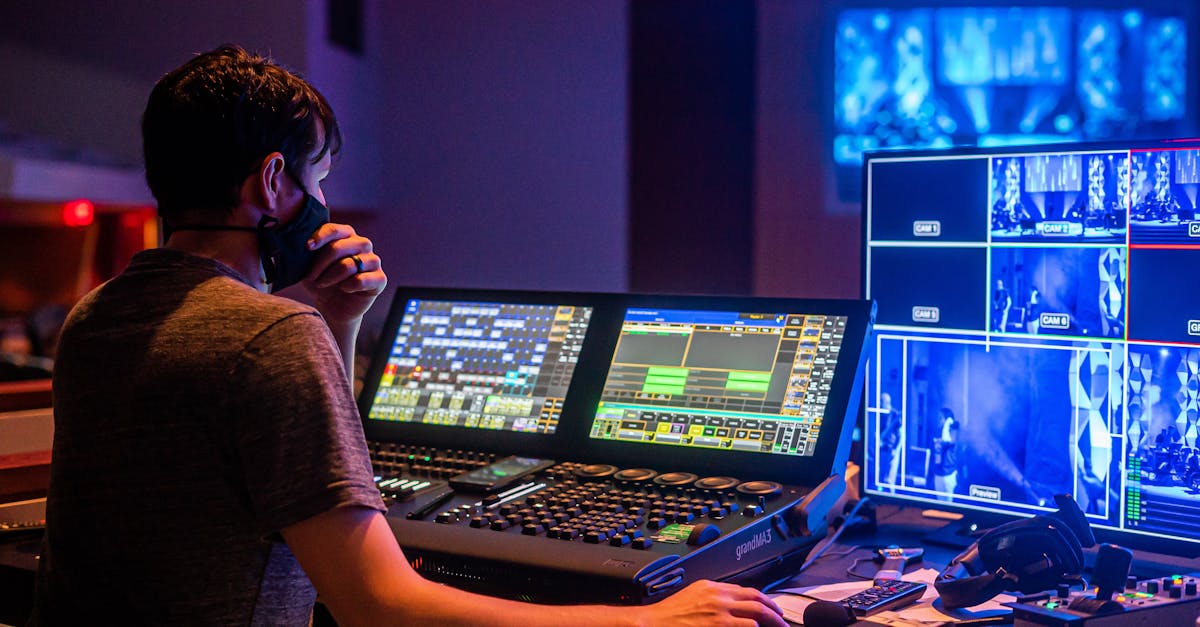
The video control room, also sometimes called “the control room,” refers to both the place where all technical operations related to an audiovisual or live production take place, and all the teams located there. In 2025, this definition has expanded further, incorporating the management of complex digital flows, image synchronization, and even the integration of real-time visual effects. The control room is an interface between several professions: the stage manager, the video technician, the broadcast manager, the live editor, and sometimes even special effects or animation specialists. It must ensure consistency between all these elements so that the final result is fluid, impressive, and faithful to the artistic vision or technical requirements. The diversity of events handled by the control room—live shows, conferences, filming, sporting or cultural events—requires a well-established organization, capable of adapting its resources to each context. The key lies in coordination between these different players and mastery of modern technological tools such as those offered by Panasonic or NewTek, which allow for the integration of numerous video and audio streams, avoiding any errors or lag. The control room is a bit like an orchestra conductor, but instead of a baton, it has a multitude of cables, monitors, and management software.
| Key elements of the video control room 🎥 | Description |
|---|---|
| Equipment | Control equipment, video mixers, audio consoles, recording servers, control monitors |
| Software | Streaming solutions, signal management, real-time visual effects, mixing tools |
| Teams | Director, video technicians, sound engineer, stage manager, special effects operators |
| Location | Fixed control room or mobile control room (a control room truck for outdoor events) |
The fundamental missions of the video control room: a complex and precise organization
What exactly are the responsibilities of a video control room in 2025? In reality, its missions are varied, but all converge towards a single ambition: to guarantee the fluidity, quality, and security of the audiovisual output. First, it must prepare the equipment in advance, checking every cable, every camera, every sensor. Then, during live broadcasts or filming, it becomes the nerve center where the real-time management of video and audio streams, their switching, amplification, and the addition of visual effects are carried out. It is also the one that must adapt instantly in the event of unforeseen events—a technical problem, a synchronization error, or a change in artistic direction. Mastery of IT tools, such as those from Grass Valley or TVU Networks, facilitates this rapid management. Digitalization has also enabled the development of virtual control rooms where everything can be done via computer interfaces, increasing speed and flexibility. It’s not just about manipulating images, but also coordinating a multidisciplinary team so that everything functions like a perfectly harmonized symphony.
- Prepare equipment and technical configurations 🛠️
- Manage live recording 📡
- Ensure consistency between image and sound 🎶
- Manage the video mixer and stream switching 🖥️
- Integrate special effects or overlay images 🎨
- Monitor quality in real time via monitors 🔍
- Coordinate technical teams 👥
- React quickly to unforeseen events 🚑
Essential equipment for a video control room in 2025: technology at the service of the show
Technological innovations play a major role in the efficiency of modern video control rooms. In 2025, equipment is increasingly powerful, modular, and connected thanks to industry-renowned brands like Blackmagic Design, Sony Professional, and Panasonic. The range of tools is diverse, but some are essential:
- Video switchers 🖥️: These allow you to select, overlay, or cut streams in real time, while integrating effects or transitions. Blackmagic Design’s ATEM series is often acclaimed.
- Audio consoles 🎙️: Essential for balancing and mixing multiple soundtracks simultaneously, with intuitive digital interfaces.
- Control monitors 🔎: Every frame must be monitored in detail to avoid errors during broadcast.
- Intercoms 🎧: Instant communication between technicians for seamless coordination. Recording servers 💾:
- store streams for post-production or accurate replay. And don’t forget the importance of streaming solutions, particularly those offered by Teradek or TVU Networks, which enable reliable transmission even in difficult conditions. Compatibility with tools like NewTek or Matrox also facilitates multi-camera management and simultaneous processing of high-definition video streams. With all this equipment, the video control room guarantees a seamless production, ready to meet all modern challenges.
The professionals who make up the video control room: skills, roles, and interactions
Every video control room is a collective, where each profession has its share of responsibility. In 2025, we find a wide variety of skills to meet technical and artistic requirements. An experienced control room manager must not only know how each piece of equipment works, but also be able to make quick decisions under pressure. Among the key players:
The director 🎬:
- He orchestrates everything. He is responsible for the final result and gives precise instructions to the other teams. The sound engineer 🎶:
- He ensures sound quality, adjusting microphones, effects, and levels according to the show or event. The video control room manager 🎥:
- He controls all the images and must be fully familiar with live editing software and equipment such as those from Grass Valley or AJA Video Systems. The lighting technicians 💡:
- They also play a vital role in setting the tone and visibility for each scene or sequence. Special effects and visual effects operators 🎭: They bring an artistic and innovative touch, particularly in interactive or immersive events.
- Maintenance personnel 🛠️: Ensure the proper functioning of equipment and intervene quickly in the event of a technical issue.
- Each actor must not only master their tools, but also collaborate closely to avoid any errors or delays. Communication, responsiveness, and adaptability become essential qualities for dealing with unforeseen events and ensuring a smooth show. Key employees in the control room 🎯
Role and responsibilities
| Director 🎬 | Coordinates all operations in real time, decides on changes, and oversees the artistic direction. |
|---|---|
| Sound engineer 🎧 | Optimizes audio quality, adjusts microphones and effects for an immersive and accurate rendering. |
| Video stage manager 📹 | Controls video streams, adjusts visual staging, and overlays live images. |
| Lighting Technician 💡 | Manages lighting to enhance each scene or artistic arrangement. |
| Visual Effects Operator 🎨 | Configures and animates integrated graphic or interactive elements in real time. |
| Maintenance Technician 🛠️ | Ensures equipment availability and proper condition, and responds quickly in the event of a breakdown. |
| 2025 Technology Trends: Focus on Virtualization and High-Performance Streaming | The video control room industry is constantly evolving, especially as live streaming over the internet becomes the norm. In 2025, the integration of new solutions such as virtual control rooms and cloud computing will profoundly change the landscape. These innovations make it possible to manage events remotely while maintaining exceptional image quality thanks to the latest processing tools. Brands such as NewTek and Panasonic offer 4K or even 8K solutions, compatible with live streaming platforms, including TVU Networks and Teradek, capable of handling multiple streams simultaneously. Virtualization reduces costs and increases flexibility, while also offering the possibility of bringing in remote experts for supervision or editing. The key to this evolution also lies in the integration of stream analysis tools, to anticipate and correct any technical or network issues in real time. The trend is clear: in 2025, video control rooms will rely more heavily on digital technology, the cloud, and artificial intelligence to deliver an optimal audiovisual experience, in real time, for ever more demanding audiences. |
https://www.youtube.com/watch?v=78mvxJEBamQ
The organizational and human challenges of the modern video control room
Continuing training and specialized certifications 📚
Stress management and responsiveness 🧠
- Communication and teamwork 🤝
- Adoption of modern digital tools 📱
- Compliance with security standards 🚨
- Discover how to effectively manage your videos with our video management solutions. Optimize the storage, organization, and sharing of your video content to maximize the impact and reach of your projects.
- Frequently asked questions (FAQs) about video control rooms in 2025

The answer involves a video mixer, an audio console, monitors, intercoms, and recording servers, complemented by modern solutions like those from Blackmagic Design or AJA Video Systems to ensure performance.
- How can you keep pace with technology in video control rooms? By taking specialized training, staying up-to-date on new developments like virtualization or 4K/8K, and investing in high-performance streaming tools like TVU Networks or Teradek.
- What qualities are needed to succeed in this profession in 2025? Adaptability, responsiveness, technical knowledge, and strong teamwork are essential to deal with unforeseen events and ensure quality results.
- What role does automation play in modern video control rooms? It can simplify certain repetitive operations, but it doesn’t replace the human eye or rapid, live decision-making, which are essential for the success of an event.
- What professions make up a control room today? The director, sound engineer, video director, lighting technician, special effects operator, and maintenance staff ensure efficient and cohesive organization.