In the hyper-connected world of 2025, understanding the technical vocabulary surrounding networks, signals, and bandwidth is becoming essential, whether for a tech professional, a curious user, or even a botanist intrigued by the data transmission they use daily. The speed of digital data flows, the reliability of connections from operators like Orange, SFR, or Bouygues Telecom, and advances in fiber optics all rely on often abstract but fundamental concepts.
To demystify this complex world, we need to understand terms such as signal, bandwidth, and signaling, which play a central role in the transmission of digital information. Knowing what these terms mean helps us better understand how our devices communicate, how networks evolve, and, above all, how they influence our daily lives, whether we’re browsing the internet, watching TV, or working remotely. And while some technical terms may seem obscure, with a little patience and curiosity, they quickly become more accessible. Throughout this article, we’ll explore this vocabulary in depth, how it works, and its challenges, while providing concrete examples from the digital landscape of 2025. Because ultimately, being comfortable with these concepts also means taking control of our own navigation in the digital world, for smoother and more secure use.

How does the signal circulate within a network?
A signal is a bit like a message we send, such as a letter or a voice, but here it is an electrical or optical signal that carries data. The first step is to convert the information into a digital format, that is, a series of 0s and 1s. The signal is then transmitted through different media, whether it be optical fiber, coaxial cable, or even wireless. For example, in a house connected to Orange or Free, the data is first transformed into electrical impulses or light currents, then sends a succession of information packets. These packets, passing through various devices such as routers or switches, can change path or media to reach the recipient. Recognizing the role of the signal in this chain means understanding how it can be affected by disturbances, such as electromagnetic interference or a cable cut. The key, therefore, lies in transmission quality: a weak or degraded signal leads to errors or slow data rates, a real headache for ensuring the fluidity of our digital communications. Especially since all of this must be orchestrated in real time, with pinpoint precision, especially for applications such as remote assistance or high-definition video. Signal strength is therefore directly linked to the speed and stability of the transfer. In practice, numerous devices such as amplifiers and repeaters play a role in adjusting and maintaining the signal throughout its journey.
Bandwidth-related vocabulary: when speed rhymes with performance
Bandwidth is a bit like the bottleneck or the fast lane of a network. It refers to a network’s capacity to transmit data, generally measured in bits per second (bps). The higher this capacity, the greater the volume of information the network can support in a given time. In 2025, with the rise of 8K video, augmented reality, and ultra-connected home automation, the demand for bandwidth will continue to increase. Most operators, such as Bouygues Telecom and Numericable, are optimizing their infrastructure to offer speeds of up to several gigabits per second, particularly thanks to fiber optics from Alcatel-Lucent and other renowned manufacturers.
Here are some key figures and facts about bandwidth:
- ⚡ Typical bandwidth for fiber optics can reach 10 Gbps or more. 🎥 8K video services can require up to 100 Mbps per stream, requiring significant bandwidth.
- 🌐 On the global internet, the expansion of 5G and next-generation networks is pushing these limits even further.
- What’s important to understand is that bandwidth isn’t just about the speed at which files are downloaded or uploaded. It also influences the quality of a video conference, the fluidity of an online game, or the speed of responses from an intelligent assistant like those offered by Proximus or Orange. It therefore serves as a lever to optimize the user experience, but its management must be finely calibrated to avoid congestion. Network Type
Typical Speed
| Main Equipment | Examples of Use | Fiber Optics | up to 10 Gbps |
|---|---|---|---|
| Modems, Splitters, Converters | UHD Streaming, Cloud, Online Gaming 🎮 | 4G/5G | 100 Mbps to 10 Gbps |
| Antennas, Base Stations, Smartphones 📱 | Mobile Streaming, IoT, Augmented Reality | Learn all about bandwidth: its definition, importance, and how it affects your internet connection. Optimize your online experience by understanding the challenges of bandwidth. | Signaling: How do networks manage communication? |
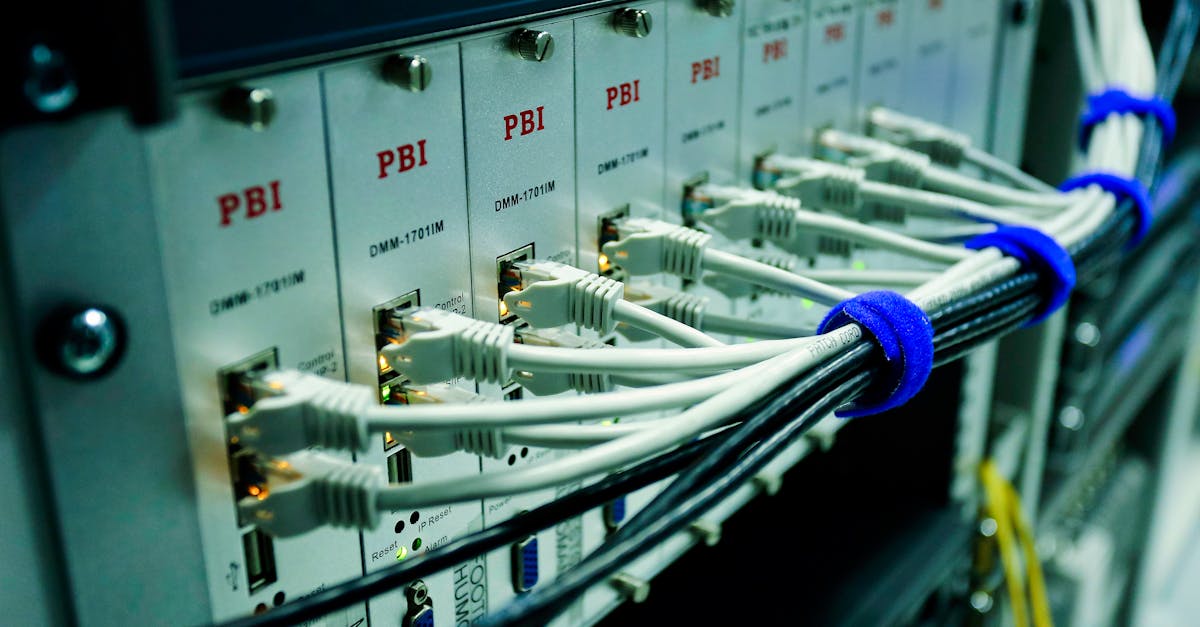
Take the example of traditional telephone networks (POTS) or modern networks like 5G: each signal must encode precise instructions to open a line, check availability, or even ensure enhanced security. Signaling can be done through specific messages, such as ACK, which confirms receipt of a packet, or via sophisticated protocols such as TCP or UDP, which orchestrate end-to-end transmission. Here are some of the systems and protocols found in signaling:
⚙️ Control signals for establishing or breaking a connection.
🛡️ Security protocols managing authentication and confidentiality.
🔄 Flow management and error correction mechanisms.
- This signaling process is so tautological that it has even been adapted to more advanced technologies, such as automatic traffic management in VoIP, or in the management of a virtual private network like those offered by Bouygues Telecom or Proximus. Without this signaling, it is impossible to guarantee the stability and performance of modern communications.
- https://www.youtube.com/watch?v=PzWK_S4wHJU
- Optimizing Bandwidth: Strategies and Tips for 2025
Effectively managing bandwidth has become a priority for internet service providers and businesses. Why? Because with the proliferation of connected devices—from smart TVs to IoT sensors to collaborative workstations—the demand for fast and stable data flows is exploding. The key to success lies in several strategies implemented by operators like Orange, SFR, and Free.
🔧
Prioritize traffic: Allow certain services, such as video conferencing or streaming, to benefit from the best quality. This can be done via QoS (Quality of Service) settings.
⚙️
- Limit demanding applications: Detect and restrict excessive use of certain software or devices in the background. 🌐 Invest in high-performance equipment: Such as routers with intelligent bandwidth management technologies, incorporating advanced control features. 🧠
- Capacity Planning : Plan investments in fiber or 5G based on growing needs, particularly for business uses or high-definition streaming. Tip
- Description Example of Practical Application Prioritize Traffic
- Use QoS to Guarantee Bandwidth for Critical Applications Sort Streams for Video Conferencing in a Business Limit Applications
| Reduce Background Use of Resource-Intensive Software | Prevent Automatic Downloads During a Video Conference | Update Equipment |
|---|---|---|
| Adopt Modern Hardware with Intelligent Bandwidth Management | Install a 5G-Compatible Router at Home | Discover everything you need to know about bandwidth: definition, importance for internet connection, and tips for optimizing it to improve your online experience. |
| Quality Management: How to Maintain an Optimal Connection in 2025 | Network quality relies on several parameters that operators like Bouygues Telecom and Numericable constantly monitor. Stability, latency, disconnections, or signal loss can complicate users’ lives, especially for online gaming or ultra-HD video streaming. Quality of Service (QoS) management is therefore essential to ensure that each piece of data reaches its destination within an acceptable timeframe. | To guarantee a seamless experience, several levers are activated: |
| 🎯 Real-time performance monitoring via advanced monitoring tools. | ⏱️ Dynamic resource adjustment to reduce latency. | 📶 Improved coverage with repeaters, small cells, or low-Earth orbit satellites. Quality Factor |
Solution Adopted
Latency
Delay in Data Transmission
- Route Optimization with Latest-Generation Routers
- Jitter
- Delay Fluctuation
| Use of Buffers to Stabilize the Flow | Signal Losses | Data Loss or Disconnection |
|---|---|---|
| Antenna Improvements and Deployment of New Infrastructure | Frequently Asked Questions about Network Vocabulary and Bandwidth | What is the difference between signal and bandwidth? |
| Signaling refers to the method of communication between devices, while bandwidth refers to the network’s maximum capacity to transmit data. | How can I improve my internet speed? | By optimizing traffic management, using modern equipment, and subscribing to a plan that meets my needs, such as fiber optics from Orange or Bouygues. |
| Why might signal quality decrease? | Particularly due to interference, long distances, or outdated equipment. | What are the main challenges for network technology in 2025? |